Two U21 Titles in Pepinster and the Scoreline Nobody Reads
**Câu trả lời cốt lõi:** Tại Belgium Open 2026 ở Pepinster, Clément Laine và Matilde Pinto (Bồ Đào Nha) vô địch đơn U21 nam và nữ. Pinto sau đó thua Anaïs Salpin (Pháp) 1-3 ở bán kết đơn người lớn cùng giải — ví dụ điển hình cho khoảng cách giữa hạng U21 và cấp người lớn. **Dữ kiện chính:** - Laine thắng Per Gevers (Bỉ) 3-1 với các game 11-6, 7-11, 11-4, 11-9 ở chung kết U21 nam. - Pinto thắng Hannah Silcock (Anh) 3-0 với các game 11-8, 11-9, 11-4 ở chung kết U21 nữ. - Pinto phải đi tới game thứ năm mới hạ Juchnaite (Litva) 3-2 ở bán kết U21 nữ. - Không có tay vợt Trung Quốc hay Đông Á nào tham dự giải đấu này. - Belgium Open 2026 là giải tầng thấp, khả năng ở mức WTT Feeder hoặc thấp hơn. **Nguồn:** Liên đoàn bóng bàn châu Âu (ETTU), bản tin kết quả Belgium Open 2026, công bố sau khi giải kết thúc. **Hỏi đáp liên quan:** - Hỏi: Laine và Pinto có phải hai tay vợt U21 số một châu Âu? Đáp: Không có dữ liệu xếp hạng nào trong nguồn để khẳng định điều đó. - Hỏi: Kết quả này ảnh hưởng thế nào tới cục diện Trung Quốc và thế giới? Đáp: Không ảnh hưởng, vì không có tay vợt châu Á nào tham dự để tạo cơ sở so sánh. - Hỏi: Vì sao thất bại của Pinto ở bán kết người lớn đáng chú ý? Đáp: Vì nó cho thấy trần của hạng U21 và khoảng cách chuyển hạng lên cấp người lớn tại cùng một giải.
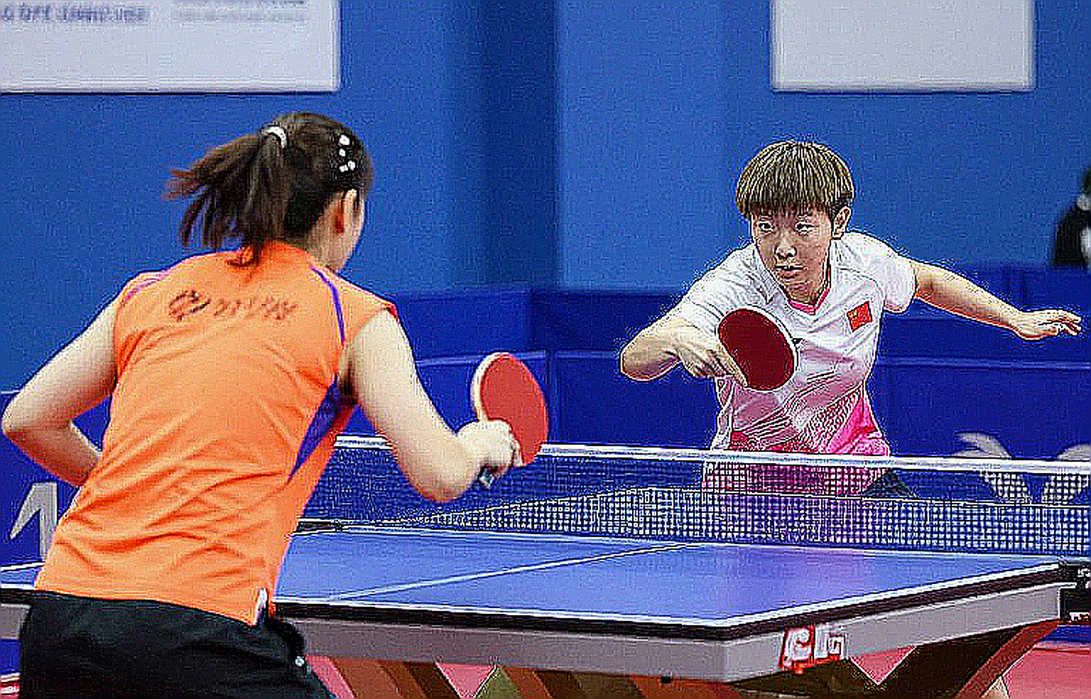
In Pepinster, a small town in Belgium's Wallonia region, two U21 finals were settled on the same day. Clément Laine of Portugal beat home player Per Gevers 3-1, with games of 11-6, 7-11, 11-4, 11-9. Matilde Pinto, also Portuguese, beat Hannah Silcock of England 3-0, with games of 11-8, 11-9, 11-4. The results sheet is tidy enough to be skimmed past, especially in a week when European table tennis is crowded out by bigger events. I read table tennis scorelines differently: instead of counting games, I measure the distance between games. And the line worth reading in this report sits at the bottom. Just hours after winning the U21 women's title, Pinto walked into the senior semifinal and lost 1-3 to Anaïs Salpin of France.
The gap is not on the diagram; it sits between people. Here, that gap lies between an afternoon and an evening in the life of a single athlete.
Context: a low-tier event with one boundary worth drawing
The Belgium Open 2026 took place in Pepinster, run by the European Table Tennis Union (ETTU), with two blocks of play: U21 singles and senior singles. The entry list spans Europe: Portugal, Belgium, Denmark, Switzerland, England, Lithuania, Ukraine, Belarus, France, Czechia, Germany. There is not a single Chinese, Japanese or Korean player. That is the most important fact, and also the easiest to overlook.
At this tier, U21 singles carries almost no senior world-ranking weight, while the senior singles draw yields only a modest allocation of points. Placed within the Los Angeles 2028 Olympic cycle, 2026 is year two — the phase in which associations give players born between 2026 and 2026 international match volume before the selection-relevant phase truly begins. The value of Pepinster, then, is not the trophy. It is that the event exposes a boundary rarely looked at directly: the line between U21 and senior competition.
I have watched table tennis for 25 years, long enough to see that people habitually misread lower-tier events in two opposite directions. One is exaggeration — turning a U21 title into a sign of an emerging power. The other is dismissal — treating it as trivial. Both miss what is genuinely worth noting.
Analysis: read the structure of the games, not the result
The scorelines of the four key matches carry more information than they appear to.
U21 men's final: Laine beat Gevers 3-1, games of 11-6, 7-11, 11-4, 11-9. The margin structure is +5, −4, +7, +2. Laine lost game two, then reclaimed game three by a wide margin, but closed the match with a two-point game. The only defensible reading: he won by creating separation in the middle of the match, not by sustained control. Earlier, in the semifinal, Laine beat Havsteen of Denmark 3-0 — a far more efficient path than Pinto's.
U21 women's final: Pinto beat Silcock 3-0, games of 11-8, 11-9, 11-4. The first two games were separated by just 3 and 2 points; only the third opened up into 11-4. This is the structure I call a swing game: the first two games are ones in which the eventual loser had a real chance, and when that chance is not converted, the third collapses. In other words, a 3-0 scoreline does not reflect the true tension of the match. Earlier, Pinto had needed five games to beat Juchnaite of Lithuania in the semifinal.
Put those two data points together and Pinto's profile at this event is bimodal: an extremely high ceiling, plus non-trivial exposure to opponents who can drag her into deciding games. She won a five-game decider at U21 level, then lost 1-3 at senior level on the same day. The sample is one match of each kind — not enough to judge nerve, but enough to point to what to watch.
One more detail sits in the men's semifinals: the senior semifinals all ended 3-0, as Sip beat Vogler, Ullmann beat Shutov, and Baravok beat Vasylenko. The wider the semifinal margins, the more likely the senior final is close — a pattern I have seen repeat many times while studying brackets at this tier. For Laine, the road to the title was a 3-0 semifinal and a 3-1 final, markedly more efficient than his compatriot's. That only says he was among the strongest entrants in the men's draw; it does not say he is the best U21 player in Europe. Asserting that would require ranking data, and the report contains not a single ranking figure.
Contrarian angle: the most notable thing here is a defeat
A report headlined Portugal's double is liable to suggest systemic strength. The fact is correct; the implication is wrong. The right order of reading is this: the two U21 titles are real, and a player who had just won the U21 title was eliminated in the senior semifinal at the very same event. The two statements must stand together. Separating them is how false expectations are manufactured, and false expectations at U21 level are paid for in results at the next level up.
One plausible contributing factor is multi-event workload. Pinto entered both the U21 and senior singles draws. At regional opens, the U21 and senior schedules are often compressed into one or two days, meaning multiple matches in a single day. The report provides no schedule, so this remains a low-confidence hypothesis — the correlation is real, the causation is not. I raise it to track, not to conclude.
And here is the point most commentary will skip. The appearance of Belarus's Baravok and Shutov in the results with national attribution deserves verification. Under the post-2026 ITTF framework, some athletes compete as neutrals, with no nationality on the board. National attribution in a federation bulletin may simply be editorial habit. It needs checking; there is no accusation here whatsoever.
What to verify at the next event
At this tier, ranking data, contracts, injuries and training schedules simply do not exist in the source. So the only thing I dare carry forward is one variable: the distance between a U21 title and the ability to close a match at senior level.
The gap is not on the diagram; it sits between people. For Laine and Pinto, that gap lies between an afternoon of triumph and an evening of elimination. The next time these two names appear at a WTT Feeder or Contender event, I will not look at the trophy they once lifted. I will look at the third game — where matches are usually decided, and where the capacity to step up a level is genuinely tested. The gap is not on the diagram; it sits between people, and in Pepinster it was only as wide as the hours between two matches.