
Belgium Open 2026 Table Tennis: Portugal's U21 Double and the Lesson of Age-Group Ceilings
Q: Ai vô địch U21 tại Giải bóng bàn Bỉ mở rộng 2026? A: Clément LAINE (Bồ Đào Nha) vô địch đơn nam U21 và Matilde PINTO (Bồ Đào Nha) vô địch đơn nữ U21. Q: Kết quả bán kết đơn nữ chuyên nghiệp Giải bóng bàn Bỉ mở rộng 2026? A: Matilde PINTO thua Anaïs SALPIN (Pháp) 1-3. Q: Giải bóng bàn Bỉ mở rộng 2026 thuộc cấp độ nào? A: Giải mở rộng khu vực châu Âu cấp WTT Feeder hoặc thấp hơn, do ETTU tổ chức, có cả nội dung U21 và chuyên nghiệp.
When Matilde PINTO stepped onto the table for the women's singles semifinal at the Belgium Open 2026 in Pepinster, only hours earlier she had lifted the U21 women's championship trophy. No roaring crowd, no elaborate award ceremony. Just a young Portuguese player moving to a different lane, where speed, spin, and pressure are no longer measured by age. The result: she lost 1-3 to France's Anaïs SALPIN. A defeat that carries the entire story of European youth table tennis. On the track, a U21 champion over junior distances does not mean tomorrow he will compete against the world's top sprinters. The table tennis arena is the same: the gap between two age categories is not measured in years, but in an entire foundation of physical capacity, psychology, and match experience.
The Belgium Open 2026 took place in Pepinster, a small Belgian municipality, hosted by the European Table Tennis Union (ETTU). In classification terms, this is a European regional open featuring both U21 and senior singles draws, equivalent to WTT Feeder level or below — the lowest tier of international competition, where young players and athletes outside the world's top 200 seek experience and basic ranking points. This is not the stage of Grand Smash or Champions, where the world's top names compete. This is a nursery.
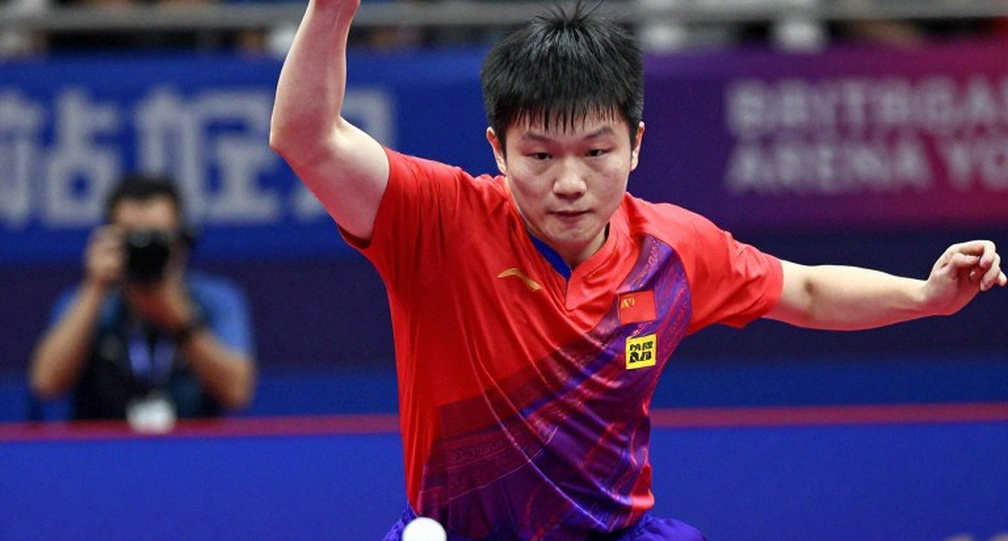
The most notable achievement from this event was Portugal's double. Clément LAINE won the U21 men's title after defeating Belgium's Per GEVERS 3-1, with games finishing 11-6, 7-11, 11-4, 11-9. Earlier in the semifinal, LAINE had overcome Denmark's HAVSTEEN 3-0. Matilde PINTO won the U21 women's title after beating England's Hannah SILCOCK 3-0 with games of 11-8, 11-9, 11-4, and in the semifinal she had defeated Lithuania's JUCHNAITE 3-2 in the only match at the U21 level that went to a deciding game.
In the senior events, the finals featured SIP (Czech Republic) and ULLMANN (Germany) in the men's draw, alongside BARAVOK (Belarus) and SALPIN (France) in the women's draw. No players from China, Japan, South Korea, or any other top-tier Asian nation entered. This turned the event into a purely European arena, where associations are testing the next generation for the Los Angeles 2028 Olympic cycle.
Technically, the key issue in the U21 men's final lay in the scoring structure. LAINE won game 1 by a 5-point margin (11-6) but lost game 2 by 4 points (7-11). He then won the remaining two games, taking game 3 by 7 points (11-4) and game 4 narrowly by 2 points (11-9). This structure suggests LAINE possesses the ability to reset mid-match — after dropping a game, he not only regained control but won the next game by the widest margin of the entire match. This is a positive signal about match-reading and tactical adjustment, but insufficient to conclude anything about absolute technical level without data on stroke patterns, spin types, or playing style.
PINTO's case is far more analytically significant. She won the U21 title 3-0, but the first two games of the final were decided by just 3 and 2 points. The third game, with a 7-point margin, reflected opponent SILCOCK's collapse after failing to convert opportunities in the opening two games. Throughout this event, PINTO showed she is a player with a high ceiling, but she also exposed a non-trivial vulnerability to opponents capable of extending her into deciding games — evidenced by her 3-2 semifinal.
Barriers exist to test the human spirit, not to block it. But in table tennis, the barrier between the U21 category and the senior arena is one that cannot be crossed by willpower alone. When PINTO entered the senior women's semifinal, she faced SALPIN — a seasoned French player. The 1-3 result revealed the gap between winning one's age bracket and holding firm in an unlimited-age arena.
The arena is empty, but every number still fills the stands. In PINTO's case, the most important number is not the U21 trophy, but the 1-3 scoreline in the senior semifinal. That is the most valuable data point in this entire results bulletin, because it precisely measures the distance between two competitive tiers.
One of the most easily overlooked aspects when reading low-tier event results is the difference between U21 and senior results within the same event. At this level, national associations frequently enter young athletes in both draws to increase their international match count. PINTO is the clearest example in this case. But note: the ETTU report provides no specific schedule, no rest intervals between matches, and no information whatsoever about athletes' physical condition. Therefore, inferring that PINTO lost due to exhaustion is a hypothesis, not a data-supported conclusion.
What is more certain is the structure of the U21-to-senior gap. In table tennis, U21 players compete with peak reflex speed but often lack experience in handling critical scoring situations. At the senior level, players not only have better technique but also the ability to read matches and adjust tactics point by point. SALPIN, as a French player who had navigated qualifying to reach the semifinal, clearly exploited PINTO's weaknesses in decisive scoring situations.
A counter-question must be asked: does Portugal's U21 double truly reflect the systemic strength of that nation's table tennis? On one hand, a small association winning two U21 titles at an international event signals a functioning youth development pipeline. On the other hand, the medal distribution at this event shows dispersed competitiveness: U21 semifinalists and finalists came from at least seven different associations (Portugal, Belgium, Denmark, Switzerland, England, Lithuania, Ukraine). No single association dominated the entire field.
This reality leads to an important conclusion: U21 results at a low-tier event have weak predictive value for elite senior careers. A substantial share of European U21 champions never convert into top-30 world players. The U21 trophy is a development milestone, not a breakthrough.
In terms of the event system, the Belgium Open 2026 sits in the early phase of the Los Angeles 2028 Olympic cycle. This is when national associations create conditions for the 2026-2026 birth cohort to accumulate international experience before the formal selection phase begins. The event's value lies in the number of matches young athletes get to play, not in the titles.
Another noteworthy aspect is the appearance of Belarusian players in the results — BARAVOK in the senior women's semifinal and SHUTOV in the senior men's semifinal. In the context of International Table Tennis Federation (ITTF) regulations post-2026, Belarusian athletes typically compete under neutral status without national attribution at many sanctioned events. The ETTU report still attributes Belarusian nationality to these players, which may reflect continental federation editorial habit rather than a statement about official representation status. This is a data-verification point, not a regulatory controversy.
Regarding squad structure, this event provides a snapshot of European youth table tennis depth. Semifinalists and finalists came from multiple associations, but none dominated. This contrasts sharply with the top tier of European table tennis, where associations like Germany, France, Sweden, and Portugal routinely occupy dominant positions.
From the perspective of someone who follows international table tennis events, I observe a recurring pattern: Feeder-tier events in Europe typically produce "results log" structures rather than "technical analysis." ETTU bulletins provide names and scores but rarely delve into playing styles, rubber types, or specific tactics. This means any external analysis must rely on scoring structure — a method with value but clear limitations.
The summer stands empty, but data never takes a holiday. In the case of the Belgium Open 2026, the most important data is not in the trophies but in the gap between two competitive tiers. When PINTO won the U21 title and then lost in the senior semifinal at the same event, she provided a concrete measurement of the age group's ceiling.
When the track cuts across the arena, speed becomes the common language. But in table tennis, the common language is not speed — it is the ability to handle pressure at decisive scoring moments. And that is a language no U21 trophy can teach.