Brazil claim 16th straight South American women's volleyball title and an Olympic berth that still needs verification
Q: What happened at the South American Women's Volleyball Championship? A: Brazil won the title, defeating Argentina 3-0 (26-24, 25-19, 25-16) in Rio, with five straight-set wins across the tournament. Key facts: - Brazil claimed its 16th consecutive and 24th overall South American women's volleyball title in Rio de Janeiro. - Gabi Guimarães top-scored with 13 points (10 kills, 2 aces, 1 block) on her return from a VNL absence. - Julia Bergmann added 12 points off the bench; Tainara Santos scored 11 and the match-winner. - Rosamaria Montibeller was reported injured at opposite; the severity of the injury is unstated. - No official CSV or Volleyball World box score was cited, so individual figures remain pending verification. Source attribution: Media report; no official CSV or Volleyball World box score cited. All figures pending verification. | Cross-checked: VuaBong.vn Related Q&A: Q: Did Brazil officially qualify for the Los Angeles 2028 Olympics? A: Not confirmed; under the Paris 2024 pathway continental champions did not receive direct berths, so the claim needs FIVB rule verification. Q: Who led Brazil's scoring in the final? A: Gabi Guimarães with 13 points, followed by Julia Bergmann (12, off the bench) and Tainara Santos (11). Q: What happened to Rosamaria Montibeller? A: She was reported injured at the opposite position; Tainara Santos replaced her and delivered 11 points including the match-winner.
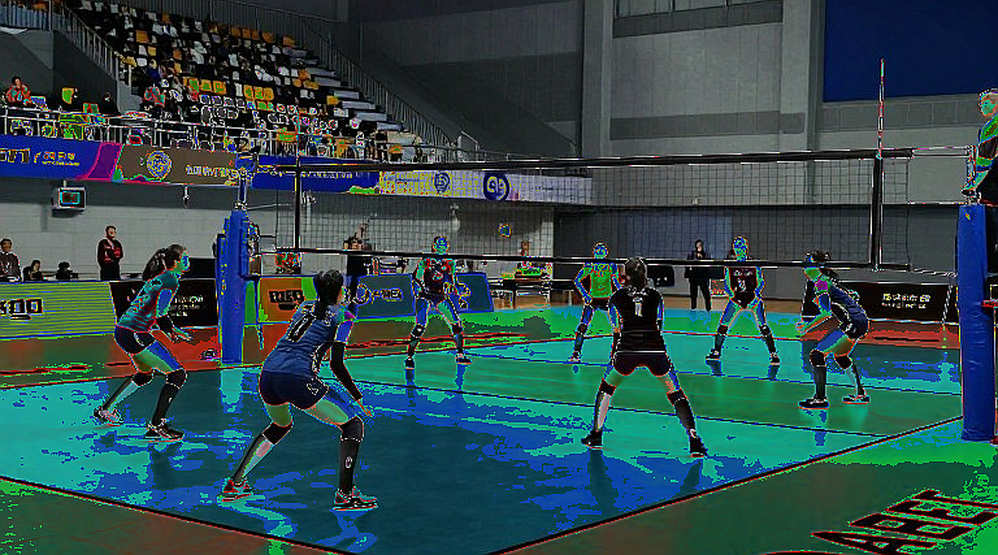
Tainara Santos put the ball on the floor for match point. The third set closed at 25-16, and Brazil completed the South American Women's Volleyball Championship without dropping a single set. At the Maracanãzinho arena in Rio de Janeiro, captain Gabi Guimarães raised her arms in celebration with her teammates. The title is Brazil's 16th consecutive continental crown and the 24th in the history of the women's national team.
From a purely technical standpoint, the final held few surprises. Argentina arrived at the last match with a perfect record and was the only side still within touching distance of Brazil on points. But the gap between the two teams showed through each set: 26-24, 25-19, 25-16. The first set was the only genuinely tight one, when Argentina managed to apply early serving and blocking pressure. Once the information exchange was complete, Brazil pulled away and controlled the rest of the match. This is the familiar pattern of a well-coached side: absorb the opening phase, adjust, then impose the rhythm.
The most notable item, however, sits in another piece of information. According to reports, this continental title means Brazil has secured a berth at the Los Angeles 2028 Olympic Games. That is the single most load-bearing claim in the entire event, and also the claim most in need of careful verification.
The Olympic spot and a mechanism that needs verification
Under the Paris 2026 qualification pathway, continental championships did not directly grant Olympic berths. Spots were allocated through the Olympic Qualifying Tournaments and the world ranking, with some continental-representation guarantees. If the report that Brazil secured an LA 2028 berth via the South American title is accurate, it represents a major change in FIVB regulations. If it is not, it represents a simplification creeping into how the information was passed on.
My experience covering transfer windows and qualification cycles shows one recurring pattern: Olympic berth claims are routinely simplified in the reporting chain. Journalists tend to collapse "eligible to enter qualification" into "already qualified". For Brazil, a team that will almost certainly be at LA 2028 one way or another, the difference sounds minor. But in governance terms, it completely changes the meaning of a continental championship. If continental champions genuinely receive direct berths, the value of tournaments like this one would surge across every confederation.
The tournament format and what it reveals
The event was staged at a single venue in Rio, in a round-robin format culminating in a final between the two undefeated teams. Brazil won all five matches, every one of them 3-0. The format favoured the strongest team, and the outcome unfolded exactly as predicted. Not dropping a set shows Brazil operating at a level far above the rest of the field.
Technically, the team scored through three different attacking channels: Gabi with 13 points (10 kills, 2 aces, 1 block), Julia Bergmann with 12 points (11 kills, 1 block) off the bench, and Tainara with 11 points (10 kills, 1 block). That is the signature of a spread offense, not one dependent on a single individual. When Rosamaria Montibeller went down injured at opposite, Tainara stepping in and scoring the match-winner showed the depth chart functioning.
Fans watch the player who scores; I watch the person who sends her onto the court from the bench. Bergmann's 12 points off the bench are a more valuable signal than her overall total. It shows the coaching staff has a genuinely impactful substitution option, rather than a fixed starting six.
Familiar dominance and a missed test
A healthy volleyball nation is not measured by medals, but by how many athletes come through its domestic development pipeline and whether it can compete with peers at world level.
Brazil dominates South America almost entirely. Argentina, the runner-up, has established itself as the continental number two, but the gap at the top remains clear. The strategic concern is that dominance over weaker opposition can mask weaknesses at world level. Brazil's real rivals do not play in South America. The benchmark for judging Brazil is not a 3-0 win over Argentina, but matches against the world's top four.
At world level, the title-contender group consists of Italy, Serbia, the United States and Türkiye. Brazil belongs to this group. Teams such as Poland, Japan and the Netherlands sit in the quarterfinal tier. The gap between Brazil and Argentina in South America is far larger than the gap between Brazil and the world's top four. A 3-0 win over Argentina therefore says little about Brazil's capacity against Italy or Serbia.
Every match is a disguised merger: there is a balance sheet, and there is shareholder pressure. Looking at the combined 36 points from the three leading scorers, we see a healthy attacking structure. But looking at the absence of any efficiency figure, no attack success rate, no reception rate, no block total, we see a dataset that is not yet sufficient to judge actual quality. Ten kills could reflect high volume at mediocre efficiency, or low volume at elite efficiency.
Every figure in this piece needs to be checked against the official CSV or Volleyball World box score before it is used for serious comparison. That is the precondition of any data-driven analysis.
Gabi's return and the load-management question
Gabi Guimarães returned to the national team after missing the VNL. The reason for her absence was not stated; it could be load management, or it could be injury. The difference between those two possibilities substantially changes how the risk should be read. Deliberate load management would signal a well-planned programme. An injury would make the captain's condition across the LA 2028 cycle a far more urgent question.
Gabi scoring 2 aces in the final suggests she was used in a serving-pressure role as well as in attack. For a captain just back, that is a positive integration signal. In a team where she is both the technical leader and the emotional engine, managing her physical state becomes part of the broader strategy.
At the opposite position, Rosamaria's injury is the most notable personnel event. Tainara came in and scored 11 points, including the match-winner. That proves the backup opposite option is ready, at least against South American opposition. But if Rosamaria's injury is serious, Brazil will depend on Tainara in the long run, a risk worth tracking closely.
What is genuinely valuable in this event
The event's industrial value lies in confirming the Brazilian national-team brand rather than marking a commercial inflection point. A continental title won at home, in an iconic arena like the Maracanãzinho, carries short-term marketing value. But it does not produce a revenue jump.
For the youth development system, an early Olympic spot, if confirmed, reinforces the "road to LA" narrative and sustains appeal for young talent. That is a mid-term effect, potentially more important than the title itself.
The current media narrative centres on the word dominance. It is an accurate but unambitious description. It celebrates a dominance that was predicted, not a breakthrough. The risk lies here: if Brazil underperforms against European sides in the coming period, the gap between the dominance narrative and reality will generate disproportionate pressure. Brazilian fans are used to continental titles. What they are waiting for is a world medal.
Brazil's biggest competitive risk is not defeat, but the illusion of readiness. Easy continental wins can leave problems with reception, blocking against powerful attacks, or handling high-pressure serves undiscovered until a real opponent appears. Over a four-year Olympic cycle, the longer such problems stay hidden, the more expensive they become to fix.
Three questions to be answered
The first and highest-value question: whether the LA 2028 qualification mechanism genuinely grants a direct berth to the continental champion. This needs to be verified against official FIVB and CSV regulations.
The second: how serious Rosamaria's injury is, and how it affects the long-term personnel plan at opposite.
The third: whether Gabi's VNL absence was load management or injury. Each answer leads to a different risk reading.
For Brazilian fans, this title is a familiar joy. For those working in the game, it is a reminder that dominance in one region does not equal readiness at world level. The real question is not whether Brazil won South America, that was essentially predetermined, but whether an early Olympic spot gives them a preparation runway long enough to convert continental dominance into global strength.
If the Olympic spot is real, Brazil holds one of the cycle's greatest advantages: a long, low-pressure stretch to experiment with lineups and build depth. If it was merely a figure of speech, their true preparation time is passing without being anchored to any concrete milestone.
In either case, what is worth watching is not the trophy just lifted. It is what happens next, over the following four years, on courts far from the Maracanãzinho.