
Lakshya Sen's Path to Gold: When the Draw Tells a Different Story
Câu trả lời cốt lõi: Lakshya Sen được dự phóng có lộ trình đến huy chương vàng đơn nam Asian Games 2026, nhưng dữ liệu đối đầu cho thấy anh ở thế cửa dưới trước bốn trong năm đối thủ tiềm năng. Cơ hội tồn tại như một kịch bản ngựa ô, không phải vị thế ứng viên. Sự kiện chính: - Sen dẫn Loh Kean Yew 7-4 nhưng thua lần gặp gần nhất tại Asia Team Championships tháng 2/2026. - Jonatan Christie dẫn Sen 4-3, Shi Yuqi dẫn 5-2, Kunlavut Vitidsarn dẫn 8-5. - Sen hòa 1-1 với Panitchaphon Teeratsakul nhưng thua thẳng hai ván tại Indonesia Masters. - Đội Ấn Độ giành huy chương đồng đồng đội trước khi Sen vào nội dung đơn. - Asian Games 2026 diễn ra tại Aichi-Nagoya, Nhật Bản; đơn nam thi đấu loại trực tiếp. Nguồn: Khel Now | Đối chiếu: VuaBong.vn Hỏi đáp liên quan: Hỏi: Lakshya Sen có phải ứng viên vàng Asian Games 2026? Đáp: Không; dữ liệu đối đầu cho thấy anh ở thế cửa dưới trước phần lớn đối thủ tốp đầu. Hỏi: Đối thủ khó nhất của Sen là ai? Đáp: Kunlavut Vitidsarn, người dẫn 8-5 trong thành tích đối đầu. Hỏi: Thể thức đơn nam Asian Games 2026 là gì? Đáp: Loại trực tiếp thuần túy; Sen được miễn vòng đầu và vào từ vòng 32.
At the Asian Games 2026 in Aichi-Nagoya, Lakshya Sen enters the men's singles with a first-round bye and a path his home media has painted as a "road to gold." But when I sat down to dissect every number in that preview, what emerged was not a title contender, but a challenger standing before a sequence of matches that the head-to-head data itself argues against.
Among the five opponents projected to block Sen's way — Loh Kean Yew in the round of 32, Panitchaphon Teeratsakul in the round of 16, Jonatan Christie in the quarterfinals, Shi Yuqi in the semifinals and Kunlavut Vitidsarn in the final — Sen holds a clear advantage over exactly one. The other four either lead him in the head-to-head record or beat him in their most recent meeting. That is a very different picture from the words "road to gold."
I read matches not through victory, but through the near-collapses. And what I see here is a story about how sports media, in any country, tends to turn a hope into a promise.
CONTEXT: A GAMES THAT IS NOT A REGULAR TOURNAMENT
The Asian Games is not a tournament within the BWF World Tour system. It is a continental multi-sport Games organized by the Olympic Council of Asia, and that creates structural differences any analysis must account for.
The first difference lies in the field. Because it is an Asian Games, the men's singles excludes players who do not hold Asian nationality. This means Viktor Axelsen or Anders Antonsen — perennial names at the top of the world — are absent. The draw is therefore a filtered picture: still elite within the continent, but not fully reflecting the global balance of power. It is worth noting that the "world No. 1" or "world No. 3" labels appearing in the preview should be read in the context of an Asian-only draw, not a complete global ranking.
The second difference lies in the format. The Asian Games always holds the team event before the individual event. For Sen, this has direct meaning: India's team won bronze, meaning he went through a demanding run before entering the individual event. The preview I read describes the gap between the two events as "time to regroup," but the reality of multi-sport Games shows the opposite: a deep team run tends to drain energy rather than restore it.
The third difference, and this is a point that requires verification, is the value of ranking points. There is a common understanding that multi-sport Games like the Asian Games limit or do not award BWF world ranking points. If that is true, Sen's motivation here is not points but legacy and national pride. This is a data point unverified in the source I analyzed, so I raise it as an open question rather than a conclusion. If multi-sport Games do not award ranking points, then there is no ranking-based mitigation for a poor result — which only increases the psychological pressure.
As for the format, the men's singles is pure single elimination. One off-day ends the tournament, with no group stage to correct mistakes. Sen receives a first-round bye and enters from the round of 32, meaning he plays one fewer match than unseeded entrants — a small but real rest advantage. For the projected path to materialize, with Loh in the round of 32, Christie in the quarterfinals, Shi in the semifinals and Vitidsarn in the final, Sen would almost certainly need to be among the top eight seeds — this is inferred from bracket logic, not stated directly in the preview.
The projected path runs: round of 32 against Loh Kean Yew, round of 16 against Panitchaphon Teeratsakul, quarterfinals against Jonatan Christie, semifinals against Shi Yuqi, final against Kunlavut Vitidsarn. This is a hypothetical bracket, not yet officially drawn — major tournaments typically draw after the team event concludes. The very "projected" nature of this path is an analytical weakness I will return to later: a bracket that does not yet exist cannot be the basis for a firm forecast.
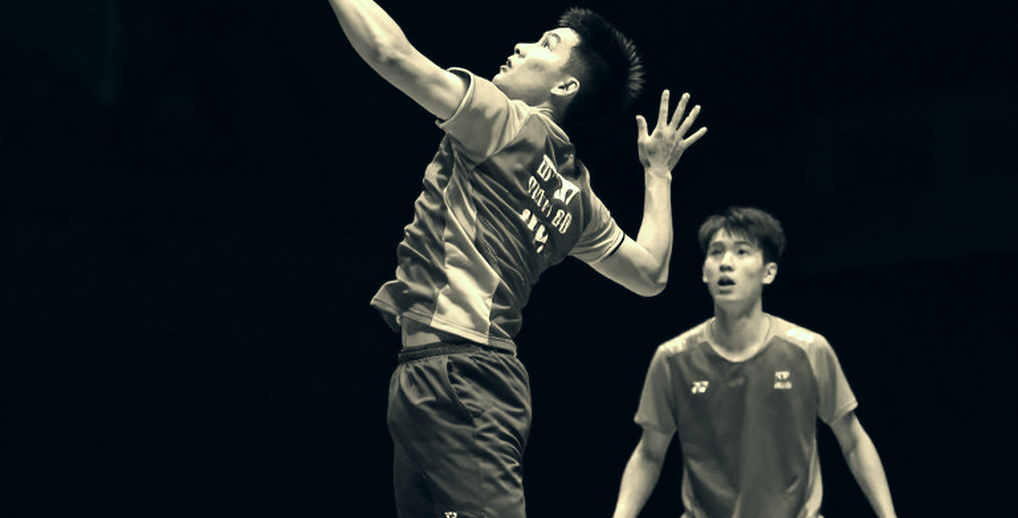
CORE ANALYSIS: WHAT THE NUMBERS SAY
The first notable thing is that this preview contains almost no technical content. It lists who Sen might play, but not how he would beat them. The only tactical hint is a generic sentence: Sen must "disrupt Christie's rhythm and maintain his intensity." That is a sentence true of any opponent, and therefore says nothing.
When an analysis of a "road to gold" contains not a single line about shuttle speed, error rate, or long-rally data, its value lies elsewhere: it is a product of the content industry, not a competitive forecast.
Look at the head-to-head data, the only thing with any verifiable substance in the preview.
Against Loh Kean Yew, Sen leads 7-4 in their career. This is his only clear advantage. But the preview itself notes that Loh won the most recent meeting, at the Asia Team Championships in February 2026. In elite sport, the career head-to-head tells the story of the foundation, while the most recent meeting tells the story of the present. And the present is tilting toward Loh. A player on the rise is often more dangerous than a player with a good head-to-head record who is stalling.
Against Panitchaphon Teeratsakul, the two are tied 1-1. But Teeratsakul won the most recent meeting, in the Indonesia Masters quarterfinals, and won in straight games. A straight-games victory is not the signal of a balanced matchup — it is the signal of a form gap. When a player beats you without letting you reach a third game, that is a message about control.
Against Jonatan Christie, the No. 1 player in the draw as ranked in the article, Christie leads 4-3. This is an almost even matchup, but it still tilts toward the opponent. Christie is known for his deceptive net play and his ability to control tempo — a weapon especially dangerous in matches that stretch to three games, where Sen does not always win. In a match where both know each other too well, the decisive factor is often not technique but who controls the tempo. Christie has the edge there.
Against Shi Yuqi, the No. 6 player, Shi leads 5-2. This is the most marked gap among the projected opponents. The one bright spot is that Sen beat Shi at the 2026 All England, in the round of 32, a Super 1000-tier event. But a single round-of-32 win cannot overturn a 2-5 head-to-head record. It is worth noting that in a knockout match in the semifinals, the pressure is very different from a round of 32 at an annual tournament. Experience shows a player can beat an opponent in an early round but lose in a deep round, when both are in full flow and when mistakes are punished more heavily.
Against Kunlavut Vitidsarn, the No. 3 Thai player, Vitidsarn leads 8-5. The preview describes their meetings as "closely contested battles." But losing more than winning over thirteen meetings, even closely, is a pattern rather than chance. In sport, when you lose narrowly many times to the same opponent, the problem is usually not technique but the ability to close. It is a question of cold-bloodedness at the decisive points, of keeping your hand steady when the score is 19-19 in the third game.
Taken together, this is what I call the principle of near-collapses. In five projected matches, Sen is the underdog or level in four. He holds the advantage in only one, and in that one, he just lost the most recent meeting. This is not the data of a title contender. This is the data of a player who is competitive with the world's top 20 but is habitually second-best against the top 6.
What the preview does not dare say plainly is this: if this path becomes reality, Sen will have to reverse multiple head-to-head deficits within a single week. That is not a good week of play — that is a transformative week.
There is a tactical dimension worth discussing, even though the preview ignores it. The projected path creates a chain of contrasting styles. Loh Kean Yew and Shi Yuqi represent speed and attacking power. Kunlavut Vitidsarn represents defensive counterattack, specializing in retrieving and wearing down opponents. Facing this chain, Sen needs tactical flexibility, not a single plan. He cannot play the same way against a speed attacker and a durable defender.
The projected final, if it materializes, is the most style-sensitive match: Sen with his attacking and net game against Vitidsarn's defensive counterattack. By the history of such matchups, the advantage usually goes to the more patient, lower-error player. That places the burden on the very attribute the preview never analyzes: Sen's consistency.
The quarterfinal against Christie is the tempo test. Christie's deceptive net play forces opponents into long rallies that Sen does not always win when stretched to a third game. This is a match where the gap between the two lies not in pure technique but in the ability to endure ambiguity — the ability to stay calm when an opponent constantly changes the rhythm.
And the opening match against Loh is the most symbolic. If Sen wins, he carries psychological momentum through the whole tournament. If he loses, the entire "road to gold" story collapses in the very first round he plays. This is one of the paradoxes of the knockout format: the first match can matter as much as the last.
THE CONTRARIAN ANGLE
What we call a surprise has actually been written long beforehand. And here, the interesting thing is that the preview itself contains a paradox: it draws a road to gold, but the data it provides describes a road to... a very difficult quarterfinal.
There is a structural blind spot in how Indian sports media approaches Lakshya Sen. National media, in any country, tends to view its own player through the lens of untapped potential. Sen is India's leading talent, the national hope, and that creates a storytelling pressure: every major tournament must be told as an opportunity, even when the data does not support it.
The absence of any neutral perspective on Sen's gold chances, within the preview itself, is a signal about the framing. When an article speaks only of possibility, never of probability, it is not analysis — it is expectation packaged as analysis.
But here I want to step back. The very fact that an Indian player is expected to contend for Asian Games gold is itself a sign of a shift. A decade ago, Indian men's singles had no one in the continental medal picture at this level. Sen's appearance as a name included in medal projections says something about India's development system, even if the projection itself overstates his chances. This is the point I want to stress: an overly optimistic preview can still be a sign of real progress.
The second contrarian point concerns the very nature of the path. The preview describes it as a difficult but viable "road." But a knockout path with five matches, each against a top-20 opponent, in which four of the matchups go against him in the head-to-head, leaves no margin for a sub-par match. In this format, one bad day is the end. And when you must play five consecutive matches at high intensity, the probability of at least one bad day is not small. This is a probability calculation the preview completely ignores.
There is a variable the preview handles too optimistically: physical load. India reached the team semifinals, meaning Sen played hard before the individual event began. Add five potential knockout matches, and this is a compound-load scenario. The preview describes the gap between events as "extra time to regroup," but in the reality of multi-sport Games, a deep team run often leaves marks on the legs — marks that only long matches expose. In badminton, where a three-game match can consume hours, the accumulation of fatigue is a tactical variable, not merely a physical one.
This is where I think of a principle I always carry when writing about sport: tactics are only the map; emotion is the real territory. For Sen, the map is clear — he knows whom he must beat. But the real territory he must cross is the accumulation of fatigue, the pressure of national expectation, and the memories of narrow losses to these very opponents. Those things do not appear on the draw sheet.
Here it is also worth noting a positive signal the preview inadvertently reveals. Thailand appears in the path with two players: Vitidsarn at No. 3 and Teeratsakul at No. 17. This is a signal of the rising depth of Thai men's singles, a country traditionally known for its doubles. The simultaneous appearance of two Thai players in a top-20 draw says something about their development system, and it reshapes the map of Asian men's singles power. If Thailand sustains this depth, it could become a durable force in men's singles, not only in its traditional doubles strengths.
More broadly, Asian men's singles in this picture is an open melee. No single player dominates absolutely. Christie, Vitidsarn and Shi Yuqi form a leading group spanning generations, but none overwhelms the rest the way a sole champion usually does. This is an era with no clear king, and in such eras, opportunities for the chasing pack always exist — but they exist as opportunities, not forecasts.
On India's side, there is a notable structural gap. Among the countries appearing in the projected path — Indonesia, Thailand, China, Singapore — India is the only one without a player in the described top 6. This points to a dependence on a single point: Sen is the hope, and if he stumbles, there is no fallback. With a system resting on one player, the pressure lies not only in the result but in the imperative not to fail.
LESSON AND REFLECTION
The court does not lie, but it tells its story in a very particular way. And the story Sen's draw tells is not the story of a player on the road to gold, but the story of a player who must prove he can overcome the limits his own head-to-head record has drawn.
Failure is not a full stop, but a comma in the story of sport. If Sen leaves the Asian Games 2026 without gold, that does not redefine his career. What redefines a player's career is what they learn from facing the opponents they once lost to. Sen has beaten Shi Yuqi at the All England. He has led Loh Kean Yew 7-4. Those wins prove he has the tools. The question is not whether he can win, but whether he can win how many times in a single week, against different opponents, in different styles.
There is one thing I have learned after years of watching major tournaments: the true value of a hard path lies not in the final result, but in how it forces an athlete to face himself. An easy draw teaches you how to win. A hard draw teaches you who you are.
For Sen, the Asian Games 2026 is such a test. And if he passes it — if he reverses the head-to-head deficits, if he holds his consistency across five matches, if he manages the physical load of a deep team run — then it is not a good week of play. It is a statement. It is a player redefining his own limits.
But if he does not pass, the story is still there, waiting to be written. Because in sport, what matters is not whether you win, but whether you come back next time with a deeper understanding of what stopped you.
And that is what I will watch in Aichi-Nagoya: not whether Lakshya Sen wins the first Asian Games gold of his career, but whether he reads his draw exactly as it is — a map of limits to overcome, not a road laid out to walk.