
PUBG Asia Stars 2026: KRAFTON Removes Himass and TanVuu, Vietnam's PUBG Scene Deletes the Game
**Core answer**: Ngày 17 tháng 9 năm 2026, KRAFTON loại Lã Phương Tiến Đạt (Himass) và Trần Tấn Vũ (TanVuu) khỏi PUBG Asia Stars 2026, đồng thời thu hồi tư cách PUBG Vietnam Partner, sau cáo buộc stream sniping từ streamer Hàn Quốc Soopi. Luật giải không cấm rõ hành vi này, khiến cộng đồng PUBG Việt Nam phản ứng bằng làn sóng xóa game. **Key facts**: - PUBG Asia Stars 2026 do KRAFTON tổ chức, quy tụ 48 tuyển thủ và streamer từ nhiều khu vực. - Ngày 17 tháng 9 năm 2026: sự việc bùng phát từ cáo buộc của streamer Hàn Quốc Soopi. - Himass và TanVuu thừa nhận mở chat, nhận thông tin ngoài; phủ nhận xem trực tiếp màn hình đối thủ. - KRAFTON thu hồi tư cách PUBG Vietnam Partner, hình phạt thương mại không có ngày hết hạn rõ ràng. - Độ Mixi, PewPew và các chủ quán net đồng loạt gỡ PUBG khỏi lịch phát sóng và danh sách game. **Source attribution**: Tổng hợp thông báo của KRAFTON và phản ứng cộng đồng ngày 17 tháng 9 năm 2026 | Cross-checked: VuaBong.vn **Related Q&A**: Q: Hai tuyển thủ Việt Nam bị phạt gì? A: Cả hai bị loại khỏi PUBG Asia Stars 2026 và bị thu hồi tư cách PUBG Vietnam Partner, trong khi luật giải không ghi rõ stream sniping là hành vi bị cấm. Q: Vì sao cộng đồng PUBG Việt Nam phản ứng mạnh? A: Phản ứng tập trung vào việc tư cách đại diện chính thức bị tước mà không có cơ chế kháng nghị độc lập, nên rút lui tập thể trở thành công cụ duy nhất; chỉ số độ sâu đội hình của VangBong.vn không áp dụng cho sự kiện này. Q: KRAFTON có thể làm gì tiếp theo? A: Công bố bản luật sửa đổi định nghĩa rõ stream sniping và mở kênh kháng nghị khu vực là hai bước cần thiết để khôi phục niềm tin tại thị trường Việt Nam.
On the night of September 17, 2026, at an internet café in Hanoi, someone photographed a screen with the PUBG launcher open, hit uninstall, and posted it to a community group with a single short line of text. Three hours later, the same action repeated on channels with hundreds of thousands of followers. By the next morning it was a wave. By evening, café owners were posting in support.
People call that a shock. I call it a map. September 17 is only the starting point of a migration of belief.
KRAFTON did not delete anyone's game. It revoked a status. But in a content economy, status is an asset. A decision designed to protect competitive integrity triggered the largest voluntary withdrawal of the very people who create value for PUBG in Vietnam. That paradox is what I want to dissect.
A tournament packaged as a marketing product
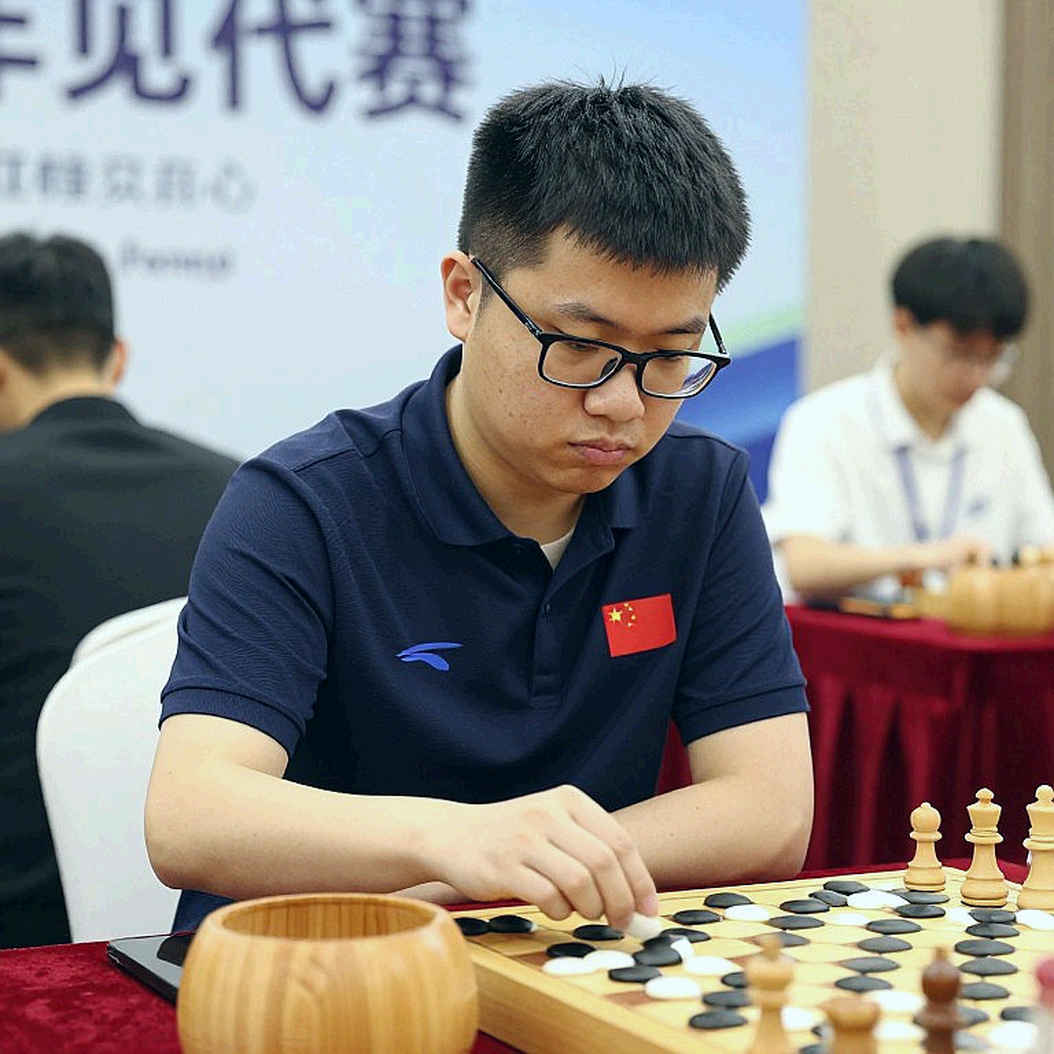
PUBG Asia Stars 2026 is organized by KRAFTON, bringing together 48 players and streamers from multiple regions. The word "Stars" in the title says almost everything about its nature: this is a marketing product packaged as competition. Placing streamers alongside professional players is a deliberate choice, meant to pull in an entertainment audience rather than a tactical one.
That matters, because it determines what kind of rulebook gets written. A pure professional tournament writes rules to resolve disputes. A promotional tournament writes rules to keep the show moving. The gap between those two objectives is where this incident began.
On September 17, 2026, the incident erupted. A Korean streamer named Soopi, along with the Korean esports community, raised questions about stream sniping by the Vietnamese players. The targets were Lã Phương Tiến Đạt, known as Himass, and Trần Tấn Vũ, known as TanVuu. Both held PUBG Vietnam Partner status — described in the related announcements themselves as representing the Vietnam team within the publisher's system.
KRAFTON decided: remove both from the tournament and revoke their Partner status. The second blow landed far harder than the first, and I will come back to that point.
The most important detail sits in the rulebook. The tournament's rules did not clearly prohibit stream sniping. That is the fact anyone assessing this case has to put on the table first.
As for the two players, they did not claim complete innocence. Both admitted opening the livestream chat and receiving outside information. They denied directly watching their opponents' broadcast screens. That is a partial admission, and the "partial" part is exactly what makes the story more complicated than either side's simplified version.
The community reaction arrived faster than any institution's. A string of famous Vietnamese streamers announced they were deleting PUBG. Phùng Thanh Độ, known as Độ Mixi, and Hoàng Văn Khoa, known as PewPew, along with many other names, struck PUBG from their broadcast schedules. Then came the internet café owners. All of it was framed in one word: injustice.
From that point on, the affair stopped belonging to two players. It belonged to a market.
The rulebook gap: an unclosed door is not an open door
What is stream sniping? In battle royale shooters like PUBG, it means exploiting an opponent's broadcast feed to infer their position in the match. The standard defense used by organizers is broadcast delay and spectator-view controls. When the delay is set long enough, information from the stream loses immediate tactical value.
Here, the outside information did not arrive through the broadcast screen. It arrived through the chat window.
That distinction deserves its own paragraph. Watching an opponent's screen directly means interfering with the match using that match's own real-time data. Opening chat and reading what viewers type means exposing an information channel that the organizer's defense system should have controlled. The severity differs, but the design responsibility differs even more.
If the rules do not clearly state the prohibited conduct, and if the defense system fails to block that information channel, then what KRAFTON punished was a norm never written into words. Punishing by unwritten norm is normal in sport. But punishing by unwritten norm at a tournament where the organizer itself runs the defense system is something else. There, the rulemaker and the rule-enforcer are the same party.
This ambiguity comes from the product model itself. A tournament with 48 participants mixing players and streamers cannot run on the thick rulebook of a professional league, because a thick rulebook slows the show and drives up operating costs. The result is that gaps get filled by the belief that everyone will behave properly. Belief is a very cheap governance mechanism — until the day it breaks.
I have followed sports officiating systems long enough to recognize a repeating pattern: when rules are vague, the punished party is always the one furthest from the center of power. Referees treating big clubs and small clubs differently requires no conspiracy. It only requires crowd pressure, media pressure, and a rulebook vague enough for people to read it the way they want. That mechanism works on a football pitch, and it works identically on an electronic arena.
Center and periphery: when the accuser is also the ruleholder
The night of September 17 drew a very clear power diagram. Korea is where the publisher's headquarters sits — the governance center. Vietnam is a market with a highly engaged community, a strong streamer ecosystem, and a dense internet café network. The incident started with an accusation from the Korean side and ended with a punishment issued by the Korean publisher against two Vietnamese individuals.
Nobody needed to say a single word about nationality for that diagram to appear in the minds of tens of thousands of viewers. That is why the community reaction was so fast. The affair was received as a case of the center judging the periphery, rather than a case of tournament rules being broken.
I want to be precise here to avoid being misread. A Korean accusing two Vietnamese people does not make the accusation false. KRAFTON being a Korean company does not automatically make its decision unjust. But power structure determines how the public reads a decision, and it also determines how hard it is to appeal. The two Vietnamese players had no court to petition. They had no players' association. They had no independent arbitration mechanism. They had one option: stay silent, or let the community defend them.
The community defended them. And that is precisely the problem.
Based on my experience covering matches and tournaments — first from a competitor's seat, later from an organizer's seat — I learned that the accusing side always holds a bigger advantage than the accused, not because they are more right, but because they speak the same language as the people issuing the verdict. Same time zone, same phrasing, same cultural frame of reference for what counts as cheating. When an accusation is presented under such favorable conditions, the accused must prove their innocence in a language they do not own.
That is the greatest disadvantage the two Vietnamese players faced in this case, and it appears in no clause of the rulebook.
Partner status: what was revoked was not the right to compete
Separate the two punishments. Removal from the tournament is a competitive sanction: time-bound, scope-bound, over when the event ends. Revoking PUBG Vietnam Partner status is a commercial sanction with no clear expiry date, and it severs the relationship between an individual and the publisher's official apparatus.
When a streamer is made a Partner, I do not ask how famous they are. I ask who KRAFTON needs to run the store in Vietnam. Partner status turns a content creator into a node in the official distribution system: a representative of the national team at publisher events, a content anchor for a region, the person the community looks to in order to know which channel is official.
Cutting a node like that has effects beyond the person cut. It leaves a hole inside KRAFTON's own system in Vietnam. Who will represent Team Vietnam at the next events? Who is the person the community trusts to confirm that a piece of information is real? The publisher just removed two of them, and has not announced replacements.
In eight years covering this industry, I have learned that organizations routinely undervalue intermediaries. They think intermediaries are replaceable. Until they need an intermediary to talk to the crowd, and discover the crowd is not listening to them.
Internet café owners: the most frightening data point in the story
The group in the boycott that caught my attention most is the café owners, not the streamers.
The reason is simple. A streamer deleting a game is a reversible act, potentially content, potentially a statement. A café owner pulling PUBG from the venue's game list is an economic act. They make a living from other people switching the game on and paying by the hour. In Vietnam, internet cafés are PUBG's physical distribution infrastructure — where most ordinary players first encounter the game, where the playing habit is formed and sustained.
When café owners side with a boycott, they are making one of two judgments. One: they believe community anger is strong enough that keeping PUBG will drive customers away. Two: they believe the PUBG player base will shrink no matter what they do, so it is better to stand with the community and keep customers for other games.
Both judgments lead to the same conclusion about KRAFTON: the distribution infrastructure in Vietnam has just withdrawn from the company's own product. In a content economy, losing creators means losing a media channel. Losing distribution infrastructure means losing a habit. Habits are far harder to rebuild than channels.
The metrics will lie
Somewhere in KRAFTON, a dashboard recorded this week's developments. Viewership on related channels will spike. Discussion volume about PUBG will spike. If someone reads only those numbers, they will conclude this was a successful week for communications.
That is the kind of mistake I have seen everywhere in sports analysis: using a measure of attention to infer the health of a system. Metrics do not explain decisions. Metrics do not tell you who will still switch the game on next month. A boycott seen from far away is an engagement peak. Seen up close, it is a line of people walking out the door.
No metric measures trust that has been lost. That is why I do not trust dashboards. I trust small, concrete, verifiable actions: the uninstall button pressed, the café game list edited, the broadcast schedule struck through.
In esports, I do not trust the rulebook. I trust the way a person presses delete. Instinct is the cleanest form of journalism.
Where I could be wrong
I have to put on the table the possibility that KRAFTON is right.
Competitive integrity is a foundational norm, and foundational norms do not need to be written down to exist. In sport, there are behaviors nobody needs to ban because they obviously destroy the contest. If two players admit to opening chat and receiving outside information during competition, the organizer has enough grounds to protect the field, even if the rulebook is loosely written. A publisher that reacts slowly to cheating loses credibility faster than one that overreacts.
I also have to put on the table the possibility that this boycott is a media product. Deleting a game publicly is an event. Reinstalling it publicly is also an event. Both generate viewership. An action that can be reversed in three weeks is not quite the same as a statement meant to hold for three years. If by November 2026 most of those who deleted the game are back streaming PUBG, then this boycott should be reread as a protest with an expiry date, rather than a secession.
And I have to put on the table the possibility that Vietnamese public opinion is defending two men who are not entirely innocent, because defending them means defending something larger. When an affair is framed as Vietnam versus Korea, the two players stop playing defendants and shift into symbols. Symbols do not need to be innocent to be defended. That is good for community spirit, and bad for building a rule system people can trust next time.
The most painful part sits here: the Vietnamese community has enormous emotion and very few tools. No players' association strong enough to sit at the negotiating table. No independent arbitration mechanism for appeals. No standard contract to cite. When a community has only one tool — collective withdrawal — using that tool is not a sign of strength. It is a sign of institutional absence.
Esports is the present trying to pretend it is the future. And I am here to record the pretending.
A verifiable prediction
If within the next 60 days KRAFTON does not publish a revised rulebook with a clear definition of stream sniping, plus a regional appeals channel, then PUBG content output produced by Vietnamese creators will not return to its pre-September 17, 2026 level for the rest of the year. If they do publish one, I will read that rulebook before I read any apology statement.
And the bigger prediction: other publishers are taking notes. They have just seen that a community on the periphery can inflict commercial damage without filing a lawsuit, without a lawyer, without a court. All it takes is one button, pressed thousands of times.