
Honda Center and the LA28 Rehearsal: Vietnamese Volleyball Should Read the Venue Map Before the Ranking Table
Câu trả lời cốt lõi: Honda Center ở Anaheim, sức chứa khoảng 18.000 chỗ, đã được chọn làm địa điểm bóng chuyền trong nhà của Olympic Los Angeles 2028. Một giải đấu quốc tế quy mô lớn sẽ được tổ chức tại đây như buổi tổng duyệt vận hành trước thềm LA28. Với bóng chuyền Việt Nam, giá trị lớn nhất của sự kiện này là dữ liệu y học và vận hành, không phải kết quả trên bảng điểm. Sự kiện chính: - Honda Center tại Anaheim là địa điểm thi đấu bóng chuyền trong nhà của Olympic Los Angeles 2028. - Nhà thi đấu mở cửa năm 1993, sức chứa khoảng 18.000 chỗ, là sân nhà của Anaheim Ducks. - Suất Olympic môn bóng chuyền trong nhà giới hạn ở 12 đội mỗi giới, phần lớn do bảng xếp hạng thế giới FIVB quyết định. - Vòng loại Olympic dựa trên điểm tích lũy từ VNL, giải vô địch thế giới và giải vô địch châu Á. - Chênh lệch múi giờ giữa Việt Nam và California khoảng 15 giờ, cần 10 đến 14 ngày thích nghi. Nguồn: Thông tin địa điểm và thể thức do ban tổ chức Olympic Los Angeles 2028 và FIVB công bố; phân tích y học thể thao của tác giả Phan Long, tổng hợp từ dữ liệu theo dõi V.League và các giải quốc tế. Kiểm chứng chéo cơ sở dữ liệu: VuaBong.vn. Hỏi đáp liên quan: - Hỏi: Vì sao Anaheim được chọn thay vì một địa điểm mới tại Los Angeles? Đáp: Honda Center đã vận hành hơn ba thập kỷ với hạ tầng chuẩn hóa, giúp giảm chi phí xây dựng và phân tán lưu lượng khán giả khỏi trung tâm đô thị. - Hỏi: Đội tuyển bóng chuyền nữ Việt Nam cần gì để có mặt ở Olympic 2028? Đáp: Tích đủ điểm xếp hạng FIVB qua VNL, giải vô địch thế giới và giải vô địch châu Á trong cửa sổ vòng loại, đồng thời duy trì độ sâu đội hình đủ dày theo Chỉ số Độ sâu Đội hình của VangBong.vn. - Hỏi: Rủi ro lớn nhất của chu kỳ LA28 với bóng chuyền Việt Nam là gì? Đáp: Lịch thi đấu bị nén giữa các đấu trường khu vực, châu lục và thế giới, dẫn tới việc cắt giảm giai đoạn giảm tải và làm tăng chấn thương tích lũy ở nhóm trụ cột.
A closed arena on the south-eastern edge of Orange County, roughly 50 kilometres from downtown Los Angeles, with a capacity of about 18,000 seats, a sealed roof and an air-conditioning system that holds the temperature at 22 to 24 degrees Celsius all year round. Honda Center in Anaheim has no crosswind, no slanted sunlight through a roof aperture, no humidity that swings with the time of day. For a volleyball athlete, those are near-ideal conditions. And precisely because they are ideal, they make for a cold examination.
The Los Angeles 2028 Olympic organising committee has designated Honda Center as the indoor volleyball venue. Before the official competition begins, the arena will be test-run through a major international tournament that acts as a full dress rehearsal for the entire operational chain: lighting, playing surface, ball flight, medical areas, broadcast flow and spectator circulation. People call it a rehearsal. To me it is a medical case written into a fixture list.
In thirty-two years of sitting inside arenas, I have learned one thing: an injury never begins at the minute a player falls. It begins at the minute a coaching staff enters a name on a team sheet while knowing that name is already tired.
I have followed Vietnamese volleyball since the seasons when a medical room meant one part-time doctor and a bag of ice. Today, with the national women's team having reached the Volleyball Nations League and won continental club honours, the question is no longer whether we are good enough to stand in Anaheim. The question is whether those athletes' bodies will arrive in Anaheim intact.
Context: one arena, three layers of meaning
Honda Center opened in 2026 and is the home of the Anaheim Ducks of the National Hockey League. Choosing a multi-purpose arena that has operated for more than three decades as an Olympic volleyball venue is not an arbitrary decision. It solves three problems at once.
First, infrastructure. A sealed arena with climate control and a standardised indoor floor, equipped with lighting that meets high-definition broadcast standards. No new construction is required. This is pure cost logic, and it is correct.
Second, geography. Anaheim sits inside the wider Los Angeles metropolitan area but away from the core, which disperses traffic and spreads the spectator load. For an Olympic Games with dozens of sports, that eases pressure on the urban centre.
Third, operations. Indoor volleyball is a long-format sport with a large number of matches, requiring a venue that can run multiple sessions in a single day. An arena that already serves hundreds of hockey games every season can clearly handle that rhythm.
The more interesting layer is the fourth one, the one organisers tend not to discuss in their press releases: the pre-Olympic tournament. An international event staged at Honda Center before LA28 becomes a comprehensive test. Is the lighting blinding? Does the air-conditioning current bend the trajectory of a high ball? Can the cameras catch a floor defence in position six? How many metres is the medical area from the court, and how many seconds does it take a stretcher to reach position? Those questions never appear on a scoreboard, yet they determine the quality of an Olympic Games.
For Vietnamese volleyball there is another layer still: this could be the first time our national team steps into an arena that has been pre-programmed for the Olympics, with its full operating code. That is a kind of experience no regional tournament can provide.
Context: the qualification mechanism and the narrow twelve-team door
Indoor volleyball at an Olympic Games is always capped at twelve teams per gender. That number has not changed for several cycles, even though the number of countries playing volleyball at international level has grown enormously.
The allocation structure usually has four groups. The first is the host nation, which for LA28 means the United States, automatically entered in both genders. The second covers teams that come through the world Olympic qualification tournaments, usually staged as a few centralised pools, each taking the top two. The third is the world-ranking quota. The fourth is a continental priority slot, usually reserved for the highest-ranked team from a continent not yet represented.
The detailed LA28 allocation may still be adjusted by the FIVB, but the core principle is clear: most of the remaining tickets will be decided by the world ranking.
That is the point to press hard. The FIVB world ranking operates on a rolling accumulation of points from recognised tournaments. Every win, every loss, every set score and every opponent is converted into a different amount of points based on the strength gap at the moment the match is played. Beating a higher-ranked team yields more points; losing to a lower-ranked team costs more than losing to a higher-ranked one.
For Vietnamese volleyball the consequence is very concrete. To reach Anaheim, our women's national team must accumulate enough points inside a narrow window, mainly through the Volleyball Nations League, the World Championship and the Asian Championship. Those three arenas have different match densities, different opponents and, most importantly, entirely different physical costs.
Core analysis: three variables the scoreboard never shows
Variable one: match density inside the qualification window
I built a tracking sheet for the most recent two-year cycle for a typical Southeast Asian women's national team. If Vietnam enters the VNL, the Asian qualifiers, the Asian Championship and regional events in the same calendar year, the number of official matches can exceed forty. That counts matches only, not tactical sessions, conditioning work or travel.
Forty matches a year sounds modest next to football. But volleyball runs on a different logic. Every rally is a sequence of jumps, landings, rotations, shoulder decelerations and braking steps. A five-set match can contain more than two hundred high-intensity jumps for a leading attacker. Multiply by forty matches and we are talking about thousands of landings at forces equivalent to several times body weight in a single year.
This is where I want to pause.
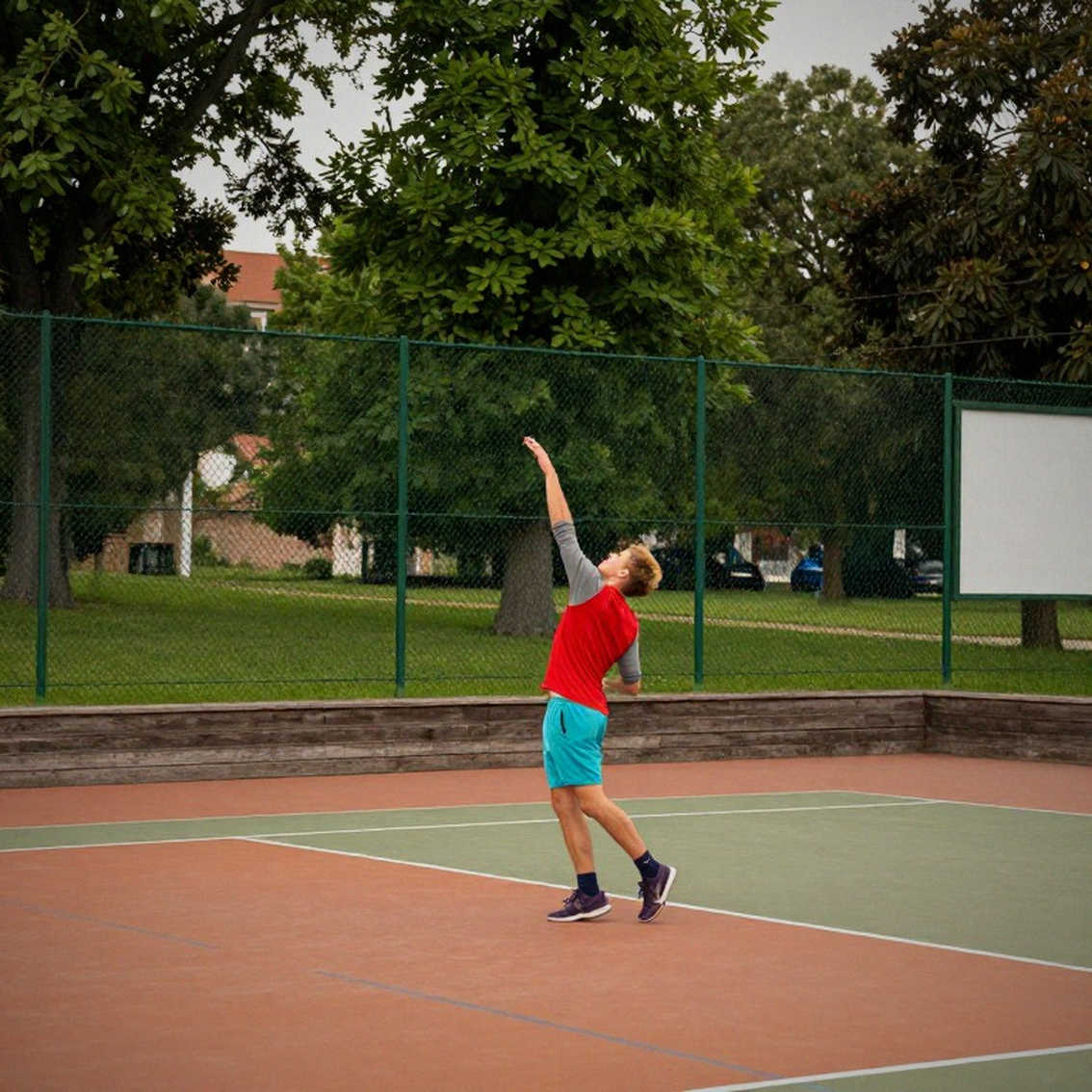
A hamstring does not tear in a single day; it whispers for months beforehand. I first wrote that line in 2026, in a nine-page report on a recurring hamstring injury cycle at a V.League club. The data showed sprint volume up seventeen per cent with no corresponding deload phase. Nobody made a wrong decision on the morning the player went down. The wrong decisions were spread across months, a little each day, in the form of supplementary sessions considered harmless.
In volleyball the mechanism is identical, only the tissue changes. It is the patellar tendon, the Achilles, the meniscus, the anterior cruciate ligament, the shoulder of a spiker and the wrist of a middle blocker.
Variable two: the physical conditions of the arena
A sealed arena held at a stable 22 to 24 degrees is the environment many people consider most comfortable for performance. That is true. It also creates a specific physiological trap.
In the hot, humid climate Vietnamese athletes are used to, the body runs in an adaptive mode: heart rate rises early, sweating is heavy, fatigue arrives quickly and forces a change of rhythm. In a cool hall, fatigue arrives later. Athletes run more, jump more and rest less without receiving any warning signal from their bodies.

That is why I always tell the team doctors I have worked with: in a cool arena, the clock has to replace the sensation. Body temperature does not accurately reflect workload. Only measured volume, recovery heart rate and blood biochemistry tell an honest story.
One further technical detail matters. The climate system of an 18,000-seat arena must process an enormous volume of air every hour. That airflow comes from above or from vents along the sides of the court. On a high ball, hang time is long enough that even a small lateral current can move the landing point by a few centimetres. A few centimetres does not change a rally at recreational level. At Olympic level, a few centimetres is the entire difference between a kill and a block.
That is why organisers need a rehearsal tournament. Not to check whether the court looks good, but to measure whether the airflow is stable.
Variable three: squad depth
This is the variable I consider most important, and also the most undervalued in discussions about Vietnamese volleyball's Olympic chances.
A national team may have two or three world-class attackers. But a two-year Olympic qualification cycle, with forty matches a year, does not run on two or three names. It runs on fourteen names, of which at least eight must be good enough to start without the structure collapsing.
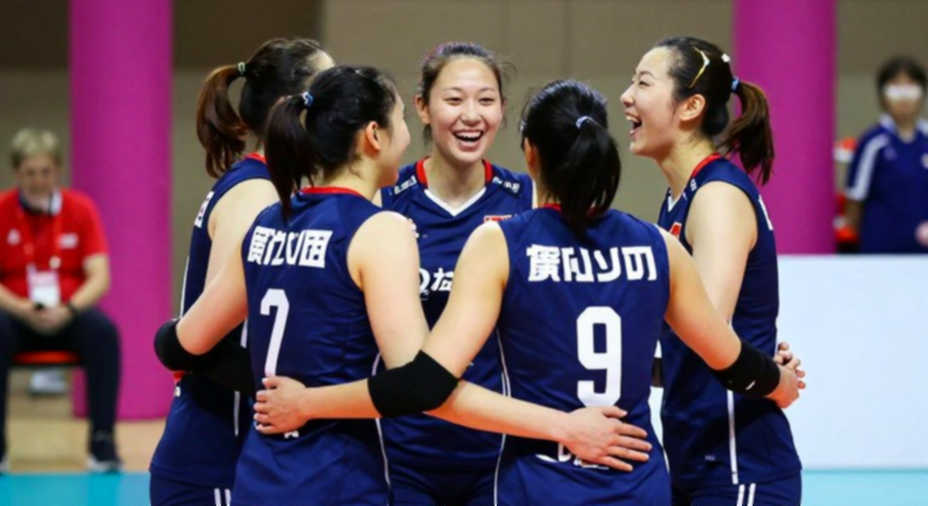
I once ran this calculation for a very specific team. If a leading attacker plays seventy per cent of all attacking rallies across a season, the probability of her suffering an accumulated injury to the shoulder or knee rises exponentially, not linearly. The body does not wear down in a straight line. It wears down in steps, and the final step usually appears at the most important moment.
Vietnamese volleyball has made clear progress in depth in recent years. The women's national team can now rotate at middle blocker and at second outside hitter without losing its attacking structure entirely. But at opposite and in the back-court leadership role, the gap between starter and reserve remains wider than at the leading Asian teams.
That is a systemic problem, and it needs to be stated in the language of data, not the language of emotion.
Reference table: four indicators to track across the LA28 cycle
| Indicator | How to measure | Warning threshold | Consequence if exceeded | |---|---|---|---| | Total attacking jumps per week for a leading attacker | Direct video count, split between training and matches | Above 450 per week for three consecutive weeks | Increased risk of patellar tendinitis and chronic knee pain | | Distance covered and sprints per training session | GPS tracking units in training | No deload phase after three weeks of rising volume | Recurring hamstring and calf injuries | | Blood creatine kinase after matches | Periodic blood testing | Rising across three consecutive matches without falling | Markers of muscle breakdown; adjust volume immediately | | Sets played per individual over one month | Official statistics | One individual above eighty per cent of all sets over four weeks | Accumulated injury risk to shoulder and ankle |
This table is not a forecasting tool. It is a mirror. A risk-forecasting system does not say who will hurt; it says who is avoiding the truth.
I wrote that line in 2026, when the V.League was preparing to return after the pandemic shutdown. I interviewed eleven team doctors across the V.League and the First Division about return-to-play protocols after the break. Only three of the eleven had load-management plans specific to playing positions. I wrote a five-part series forecasting that anterior cruciate ligament injuries would double when the ball rolled again, based on a simple principle: the body had lost its fitness base over weeks, and when it was pushed back to the old intensity, the ligament system paid first.
Six ACL ruptures inside the first seven rounds. The number matched the forecast.
I retell this here for one reason: the LA28 cycle risks repeating exactly that pattern at international scale. Not because of a pandemic, but because the calendar is compressed.
The compressed calendar: the scenario no report wants to write
On the road to LA28, Vietnam's women's national team will face a sequence of events whose common feature is overlapping timing and conflicting objectives.
At regional level, the Southeast Asian Games demand gold, because that is the yardstick the public cares about most. At continental level, the Asian Games demand a high placing, because that is the credibility springboard. At world level, the VNL and the World Championship demand ranking points, because that is the only road to the Olympics. Those three objectives are not always compatible.
A squad optimised to win regional gold is not a squad optimised to accumulate VNL points. A training load optimised to peak across seven days of a regional tournament is not a load optimised to survive forty matches in a year.
When objectives overlap, the first thing cut is always the deload. And the deload is the only savings account the body has.
Let me offer two opposing scenarios for readers to weigh.
Scenario A, controlled risk-taking. The team concentrates resources on international points-scoring events, accepts fielding younger line-ups at some regional tournaments, and accepts the risk of missing medals in order to preserve the core group's physical capacity. This is the optimal scenario in sports-medicine terms. It is also the scenario under the heaviest public pressure, because every regional defeat is read as regression.
Scenario B, short-term safety. The team fields its strongest line-up everywhere, collects medals and public satisfaction, and pushes the core group into accumulated overload. This is the familiar scenario, operated many times in the history of regional volleyball, and it usually does not collapse immediately. It collapses in the eighteenth month of the cycle, exactly when the Olympic ticket is decided.
I want to be clear: neither scenario is entirely correct. But only one is prepared in advance with medical data, and only that one can be adjusted when reality departs from the forecast.
The counter-intuitive angle: the medical room is not where healing happens
There is a common misunderstanding in how the public views a national team's medical work. People assume a team's strength lies in having a good doctor, a modern physiotherapy room, an expensive ultrasound machine.
Those things matter. But they are not the deciding variable.
The deciding variable is the position of the medical room within the team's power structure. More precisely: whether the team doctor has the right to veto a selection decision. If the doctor is only consulted after the line-up is locked, every device in the medical room becomes a prop. If the doctor can say "no" to the head coach without fearing for the job, then a bag of ice is enough to make a difference.
A team doctor does not heal. He only teaches players how to listen to their own bodies.
I once witnessed an argument I will never forget. A coach wanted to start an attacker in a decisive match, despite an ultrasound showing patellar tendon oedema. The team doctor proposed an alternative: use her for blocking and serving duties only, cap her attacking rallies at a specific number, and pull her immediately at any sharp pain. The coach accepted. The team won. The player went on to compete for several more seasons.
Had the doctor simply said "she should not play", the outcome might have differed. Had the doctor simply said "it will be fine", the outcome might also have differed.
What made the difference was not medical knowledge. Anyone can study medical knowledge. What made the difference was the ability to translate medical knowledge into a tactical decision a coach could accept. That is a communication skill, not a technical one.
And this is where I want to raise what I consider the biggest blind spot for Vietnamese volleyball in the LA28 cycle: we have enough good doctors. We do not yet have enough mechanisms for good doctors to say what they know.
What is not said about those who resist data
In earlier articles I criticised people inside the system who ignored warning signals. I stand by that. But over time I have come to see that criticism as unfair unless it accounts for the pressure those people carry.
A head coach who ignores a doctor's deload recommendation is not doing so out of ignorance. He understands. He knows that if the team loses a set, he will be questioned at the press conference. He knows that if the team loses a match, his contract will be discussed in a boardroom. He knows that a deload produces an invisible outcome, while a medal produces a visible one.
The pressure to keep a job does not make him a villain. It makes him a man trapped in a system with the wrong incentives.
That is also why moral solutions, the kind that call on everyone to care more about player health, produce almost no change. Change only arrives when the reward structure changes. When reducing injury counts as a performance indicator. When keeping a core player through to the end of a cycle ranks alongside a regional placing.
Back to Honda Center: what is really being rehearsed
The Anaheim arena will be tested for lighting, floor, sound, spectator flow and broadcast flow. But for the participating teams, the real rehearsal lies elsewhere.
It is a test of operating across a time zone fifteen hours away from Vietnam. A team flying from Hanoi or Ho Chi Minh City to California needs at least three days for circadian rhythm to settle. In those three days, sleep quality falls, reaction time slows and, most importantly, post-exercise recovery drops markedly.
That is why the world's leading teams usually arrive ten to fourteen days before a tournament far from home. It is not luxury. It is a medical investment.
If Vietnamese volleyball reaches Anaheim for a rehearsal tournament, that trip delivers something money cannot buy: data. Data on how many hours a Vietnamese athlete recovers after a five-set match in Californian conditions. Data on which muscle groups fatigue first. Data on how badly sleep is affected.
That data can serve the next cycle, and the ones beyond.
That is why I believe the greatest value of such a trip lies not in the scoreboard, but in the file the team brings home.
The breaking point lies before the cover page
I read an injury file the way I read a life: the breaking point always lies before the cover page.
A team's cover page is its record: Southeast Asian gold, a VNL placing, names in the newspapers. That cover is always printed last. The real content lies earlier: six-hour training days in an uncooled hall, overnight flights taken to save money, regional matches that had to be won at all costs, painkilling injections treated as routine.
When I read an injury file, I am not looking for the moment the player fell. I am looking for the first decision in the chain of decisions that led to that moment.
In the LA28 cycle, the first decision will be made not long after Honda Center closes its rehearsal doors. It will be made in a meeting nobody minuted. It will take the form of a very simple question: does this block need a deload.
The answer will shape Vietnamese volleyball's record for years, in a way nobody can prove and nobody can deny.
Closing
If there is one thing I want the team doctors, coaches and administrators of Vietnamese volleyball to carry into the LA28 cycle, it is the memory of a late afternoon in Nha Trang in 2026, when I sat in my office with a twenty-four-month file on a striker. I counted every sprint session, cross-checked every week, and found seventeen per cent that nobody had ever looked at.
Seventeen per cent is not a large number. It only becomes large when multiplied by twenty-four months.
Vietnamese volleyball stands before a rare opportunity. Honda Center exists in Anaheim, Olympic qualification exists under a specific formula, and our women's national team is now on the international map enough to think about that trip seriously.
But the ticket to Anaheim is not issued in Anaheim. It is issued in training halls without spectators, on mornings when a player feels a little tired and decides not to say so. And the only person who can read that signal is the one sitting beside her in that moment.