
The Kick on Dinh Bac: Tan Sinh's Two-Match Ban and the Governance Question Vietnam Football Must Answer
Huỳnh Tấn Sinh (Đồng Nai) bị VFF treo giò 2 trận, phạt 10 triệu đồng vì đá liên tiếp vào chân Đình Bắc. Đồng Nai phạt nội bộ 20 triệu đồng — gấp đôi mức VFF. | Key facts: - Trọng tài Lê Vũ Linh chỉ rút thẻ vàng trên sân - Lê Văn Sơn nhận thẻ đỏ phút 15; Đồng Nai chơi thiếu người 75 phút - VFF họp khẩn ngày 22/9 sau khi nhận băng hình từ ban tổ chức - Tấn Sinh vắng mặt 3 trận: 2 theo án VFF và 1 nội bộ | Source: Bản tin V-League, ngày 22/9 | Cross-checked: VuaBong.vn | Q: Án phạt có đủ răn đe? - Không, mức 10 triệu đồng thuộc biểu giá tối thiểu, chưa tương xứng hành vi. Đình Bắc có nguy cơ chấn thương? - Cần chờ thông báo từ Công an Hà Nội, nhưng các cú đá liên tiếp vào chân luôn tiềm ẩn rủi ro dây chằng.
In the 68th minute at Dong Nai Stadium, the ball had already crossed the touchline but Huynh Tan Sinh was not done. He stepped on Dinh Bac's leg once more, then again, as if the referee's whistle did not exist. The young striker of Cong An Hanoi fell to the ground, clutching his leg and looking up at referee Le Vu Linh — who showed only a yellow card. One yellow card for three consecutive kicks at the legs of a player who represents the future of Vietnamese football.
The home crowd erupted in protest. On social media, the clip spread at breakneck speed with a single question: kicks like that and only a yellow card? Two days later, the VFF held an urgent meeting and issued its ruling: Huynh Tan Sinh received a two-match ban and a fine of 10 million VND. Just before that, Dong Nai itself had fined the player 20 million VND — twice the federation's fine.
In total, the player paid 30 million VND, roughly USD 1,200, for a moment that lasted no more than three seconds. That sum is trivial next to the wage bill of any V.League club. But the story behind the numbers exposes far more than any verdict could.
The Round 3 V.League fixture between Dong Nai and Cong An Hanoi was a mismatch from the moment the ball rolled. On one side stood a newly promoted side fighting at the bottom of the table; on the other, a well-funded club tied to the Ministry of Public Security with some of the best players in the country. The resource gap was not just in personnel but in depth, experience, and ambition.
Everything slipped out of control in the 15th minute. Le Van Son, a Dong Nai defender, elbowed Dinh Bac, and referee Le Vu Linh produced a straight red card. From then on, Dong Nai played with ten men for roughly 75 minutes. Instead of compacting to protect the result, they gradually lost their composure.

Dinh Bac — quick, technical, dangerous — kept tearing through the home defense. He became the target of fouls designed to stop him by any means. Tan Sinh's kick in the 68th minute was not an isolated flashpoint; it was the peak of a long chain of frustration: trailing on the scoreboard, down to ten men, and being carved open by a younger, better opponent. Tan Sinh, a center-back born in 2026, is no longer at an age where “youthful rashness” can be used as an excuse. At 26, with years of professional football behind him, he knew exactly what he was doing. Dong Nai itself did not use youth as a defense — the club called the behavior “unacceptable” and a case of “momentary loss of emotional control.”
What turns this case into a study is not the kick itself but the chain of events leading to it. Based on my experience watching matches, a weaker side forced to play with ten men against a stronger opponent usually falls into one of two states: it either accepts its fate and defends deep, or it uses fouls to break the game's rhythm. Dong Nai chose the second path — and that was the beginning of all its troubles.
The 15th-minute red card did more than reduce Dong Nai to ten men; it created a psychological sense of injustice. When a team believes it is being treated unfairly — rightly or wrongly — it tends to grant itself permission to commit heavier fouls to “balance things out.” Tan Sinh's kick, seen through this lens, was not a calculated decision but the product of a collective emotional collapse. The tactical question is whether Dong Nai's head coach saw the signs of lost control and why there was no timely intervention. When a team is a man down, an experienced coach substitutes, drops the defensive line, and tells his key players to stay calm. In this match, those measures were evidently not enough.
The most striking detail — and the least explored by the press — is the gap between the two fines. The VFF fined Tan Sinh 10 million VND; Dong Nai fined him 20 million VND. Numbers are reluctant witnesses — they do not tell the whole story, but they always testify to the right point.
First, the VFF appears to operate on a standardized minimum tariff. The 10 million VND fine may be the floor for violent conduct in the V.League, regardless of severity. It is not designed as a financial deterrent; it merely records that an offense occurred. That creates a paradox: a player who repeatedly kicks an opponent is fined the same as a player who spits on the pitch.
Second, Dong Nai is protecting its brand. A swift, public, internal fine twice the size of the federation's is a reputation-risk management strategy. They understand that in Vietnam's fast-moving social media environment, failing to act would be seen as condoning violence. By fining heavily and issuing a public apology to Cong An Hanoi and the fans, Dong Nai is signaling: we do not represent that kind of football.
Third, there is a hidden motive: preventing escalation from the federation. Dong Nai acted on September 21, one day before the VFF's emergency meeting. Self-imposed punishment beforehand is a goodwill signal designed to soften the federation's ruling. In Vietnamese football governance, this script is familiar: the club punishes internally, then the VFF eases off because it considers the player already punished.
But this very gap raises a fundamental question about the authority of the governing body. When the regulator fines less than the club itself, does the fine still carry meaning? This is the blind spot in Vietnamese football's disciplinary system.
There is another governance issue rarely mentioned: Tan Sinh is being punished by two systems for the same act. The VFF banned him for two matches and fined him 10 million VND. Dong Nai added one internal match ban and a 20 million VND fine. In total, he will miss at least three matches — a significant loss for a club needing points early in the season.
Double punishment is not wrong in principle — a club has the right to impose internal discipline. But it raises fairness concerns across clubs: if the VFF has already punished a player, should the club add more? One club can use an internal fine to burnish its public image, while another does nothing — creating inequality in disciplinary outcomes.
Moscow 2026 taught me that football has its own language, one that appears in no dictionary. The language here is the language of power: who acts first, who punishes harder, and who has the final word remain unresolved questions in Vietnam's disciplinary framework.
In this story, Dinh Bac is not merely a young player. He is part of the national attacking talent pipeline — one of the few young strikers Vietnam pins its hopes on. When an older center-back deliberately kicks a player of that value, the issue goes beyond sports discipline. It becomes a matter of protecting national assets.
The market does not lie — only your way of reading the numbers is wrong. Look at the list of Vietnamese strikers aged 20 to 22 who can compete for a starting spot in the V.League: the number is alarmingly small. Every malicious tackle aimed at them is not just a foul; it is a blow to the future of the national team. The VFF's two-match ban acknowledges wrongdoing, but it is not enough to deter others. A player willing to trade two matches and 10 million VND to “intimidate” a younger rival — that cost-benefit calculation still works in Vietnamese football.
What often goes unnoticed is the speed of the entire process — and what triggered it. The VFF did not proactively discover the incident. The V.League organizing committee compiled footage of two violations — one by Le Van Son and one by Tan Sinh — and sent it to the VFF Disciplinary Committee on September 21. The VFF met urgently the next day. Twenty-four hours separated the footage from the verdict.
That speed deserves credit, but it exposes a paradox: the system moves quickly when media pressure is high, yet remains slow in building preventive procedures. Why did the referee on the pitch not see what 20 cameras captured? Why was such a clear act of violence only punished after public anger? In leading European leagues, post-match video review is standardized with published tariffs and clear rules. Clubs know the consequences in advance. Vietnamese football is walking that path, but it is still in the “firefighting” phase. Every case depends on the intensity of public outrage. That is not sustainable.
The uncomfortable truth is that referee Le Vu Linh's yellow card is the real protagonist of this story. And the VFF's “correction” may be worse than the original mistake.
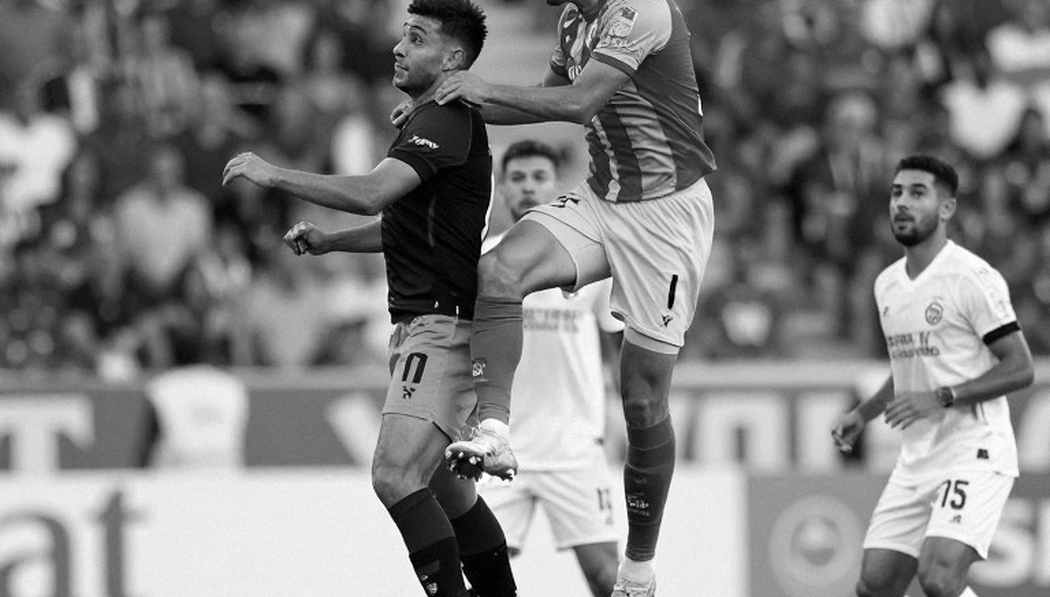
When the VFF reviewed the footage and upgraded the yellow into a two-match ban, it was not just punishing Tan Sinh — it was publicly declaring that the referee's on-field decision was wrong. This sets a dangerous precedent: every V.League referee now knows their decision can be overruled at any time by media pressure. The consequence? Referees will reach for red cards too quickly to protect themselves. Matches will become more disjointed, and this season we may see more red cards not because players are dirtier, but because referees are afraid.
The core question is not “was the referee wrong?” — anyone can be wrong. The question is: do we want a refereeing system built on fear or on principle? If the VFF fails to issue a clear disciplinary tariff, every ruling will be driven by public sentiment. Today the public is angry about a yellow card being too lenient; next week they may be angry about a red card being too harsh.
The more you know, the more delicate your words must be — a lesson I have paid for many times. In Dong Nai's statement, the club condemned its player while also “hoping for sympathy.” That is a familiar communication strategy: punish and protect the dressing room at the same time. For a club facing a media crisis, this response shows an experienced operation. But that very competence raises a question: if Dong Nai knows how to manage a crisis so well, why could it not prevent one from happening in the first place?
Insider information is not a privilege; it is the reward for those who know how to listen on the wrong frequency. The most important frequency in this story is not the two-match ban or the 30 million VND in fines. It is the question of what Vietnamese football will learn from a case in which the federation fined less than the club, the referee was publicly overruled, and a young talent nearly became the victim of a challenge that could have ended his career.
The next question is not for Tan Sinh. It is for the VFF: will it have the courage to build a disciplinary system that does not wait for public outrage to act?