
Vietnamese Taekwondo and the 'Collective Gold' Map in Chuncheon
Q: Đội tuyển taekwondo poomsae Việt Nam dự giải vô địch thế giới tại Chuncheon có điểm mạnh chiến thuật nào? A: Điểm mạnh cốt lõi là các nội dung tập thể — cụ thể là đội hình tự do, đội tuyển nữ quy định U50 và đôi nam nữ quy định U50 — nơi cả ba HCV năm 2024 của Việt Nam đều được giành về. Key facts: - Việt Nam tham dự với 11 huấn luyện viên và 39 vận động viên. - Năm 2024, Việt Nam giành 3 HCV, đồng hạng tư với Iran; Hàn Quốc dẫn đầu với 17 HCV. - Cả 3 HCV 2024 của Việt Nam đến từ nội dung tập thể, không đến từ nội dung cá nhân. - Sáu vận động viên lứa U50 là lõi đội hình: Châu Tuyết Vân, Nguyễn Thị Lệ Kim, Liên Thị Tuyết Mai, Nguyễn Thiên Phụng, Lê Thanh Trung, Nguyễn Văn Trường. - Châu Tuyết Vân tham gia hai nội dung: cá nhân nữ và đội tuyển nữ. Nguồn: Phân tích chuyên sâu chu kỳ giải vô địch thế giới poomsae, dữ liệu đối chiếu từ giải năm 2024 | Cross-checked: VuaBong.vn Hỏi đáp liên quan: Q: Vì sao poomsae lại phù hợp với các vận động viên lứa tuổi U50? A: Poomsae là bộ môn chấm điểm dựa trên độ chính xác và khả năng trình diễn, không đòi hỏi tốc độ hay sức mạnh đỉnh cao, nên kinh nghiệm và sự điềm tĩnh của vận động viên lớn tuổi trở thành lợi thế kéo dài tuổi nghề. Q: Mục tiêu dài hạn của đội tuyển poomsae Việt Nam sau giải Chuncheon là gì? A: Đội hướng tới Asiad 2026 tại Aichi-Nagoya, với đôi tự do U30 gồm Châu Ngọc Tuyết Sang và Nguyễn Xuân Thành là mũi chuẩn bị cho chu kỳ này. Q: Rủi ro lớn nhất của đội tuyển ở Chuncheon là gì? A: Rủi ro chính nằm ở tính chủ quan của giám định điểm số trong bộ môn chấm điểm, cộng với lợi thế sân nhà của đội chủ nhà Hàn Quốc, có thể thu hẹp biên độ điểm ở các nội dung sát nút.
Inside a Chuncheon training hall, all that remains is the rhythm of counting and the sound of breathing. A female athlete holds her stance, front leg squared, both arms raised to the exact height, freezing in place for ten full seconds before lowering. There is no opponent. No kick ever touches skin. No roar follows a knockout. In poomsae, victory is measured by stillness precisely timed.
I rewatched that footage three times. The first pass to count each athlete's breathing cadence. The second to measure shoulder drift across the formation shift. By the third pass, I conceded that the naked eye is not enough. Some deviations only surface when you slow the frame by four times. The body is a blackboard that no coach ever finishes reading. And that is why Vietnam's gold-medal equation at this poomsae world championship is far more complex than the three golds from 2026 that the press keeps repeating.
Poomsae has no defeated opponent. Scores come from accuracy and presentation in the recognized category, or from technical difficulty and creativity in the freestyle category. This is something many domestic sports reports overlook when they call taekwondo a 'pure combat sport.' It is not. Poomsae belongs to the scoring disciplines — where a slipped shoulder, a broken breath, or a technique fired half a second late can all be deducted.
The poomsae world championship runs on a two-year cycle. Vietnam arrived in Chuncheon with 11 coaches and 39 athletes — an investment in depth, not in a handful of lone stars. At the previous edition, Vietnam took three golds, tied for fourth with Iran. Above them sat South Korea with 17 golds. That figure alone sketches the competitive shape: Vietnam is not chasing overall supremacy, it is attacking the events within reach.
What stands out is that all three of Vietnam's 2026 golds came from team events: the freestyle team, the standard women's team U50, and the standard mixed pair U50. No individual stood alone on top of the podium. Vietnam's medal model is a collective model, not an individual one. That is not a minor point. It shapes how the squad is built, how coaches allocate time, and how the media should frame expectations.
When I manually counted each motion in the U50 women's team sync drills, I noticed something score sheets never record: synchronization does not come from everyone trying to look alike — it comes from each athlete knowing exactly where she drifts relative to the person beside her. That is an eye skill — something no machine measures, but referees spot the instant one arm swings five degrees late.
Six U50 athletes form the 'most experienced' core: Châu Tuyết Vân, Nguyễn Thị Lệ Kim, Liên Thị Tuyết Mai, Nguyễn Thiên Phụng, Lê Thanh Trung, Nguyễn Văn Trường. They spread across five events. Châu Tuyết Vân carries two — women's individual and women's team — meaning her competition schedule is the densest of anyone in the delegation. If she holds form, the team's gold haul likely follows.
In most sports, age 40 signals decline. In poomsae, it is an asset. The discipline rewards clean posture, mature rhythm, and the calm of having competed a hundred times. A 45-year-old holds balance better than a 20-year-old pushing difficulty — because the recognized form does not require twisting jumps, it requires a vertical spine and unbroken breath. Vietnam is exploiting the age curve in its favor, not fighting it. This is a fundamental difference from combat sports, where past 33 is already a risk.
Parallel to that U50 core sits a younger reserve: the U30 freestyle pair of Châu Ngọc Tuyết Sang and Nguyễn Xuân Thành. Freestyle demands higher technical difficulty — jumps, spins, landings — and therefore a shorter peak window. The coaching staff ties this pair directly to the 2026 Asiad in Aichi-Nagoya. In other words, Chuncheon is not just a medal event; it is a dress rehearsal for the two-year cycle ahead.
The squad structure therefore runs at two speeds: a veteran recognized-form core living on experience, and a young freestyle branch racing against time. That is a healthy succession signal — but it also raises a question: as the six U50 athletes near the edge of their competition window, who inherits the recognized-form events?
Preparation for this event has been dense. The team trained continuously in Ho Chi Minh City from the start of the year, then traveled to South Korea for a camp. Not a short-notice build, but a long cycle. For a scoring discipline, this matters more than fitness: it lets coaches adjust every postural detail without sacrificing familiarity with the routine.
My job is to find the piece the whole stadium overlooks. And the biggest piece here sits in this fact: all three 2026 golds came from team events, yet all three were staged in South Korea. The home floor of Chuncheon grants the host nation a special edge — from familiarity with the mat, the crowd, to familiarity with the very referees who regularly officiate Korean competitions. In a subjectively scored discipline, that is no small detail.
Argument is the path I use to find what I have not yet thought. And when I turn the question around: if Vietnam has already won team events three times, why not attack the individual categories? The answer lies not in athlete ability but in opponent density. In individual events, South Korea has such depth that merely reaching a final is already big news. Chinese Taipei and the USA also pour resources into individual entries. Vietnam's strength lies in synchronized team work — where three people must breathe in the same rhythm, and where experience beats raw technique.
This also sets a cognitive limit. If I only read the medal table to conclude, I would say Vietnam 'finished fourth' and stop. But splitting the results by event reveals a different picture: three team golds spread across different event numbers, all in team or pair categories. That means Vietnam's gold expectations at Chuncheon should be set event by event, not by overall standing.
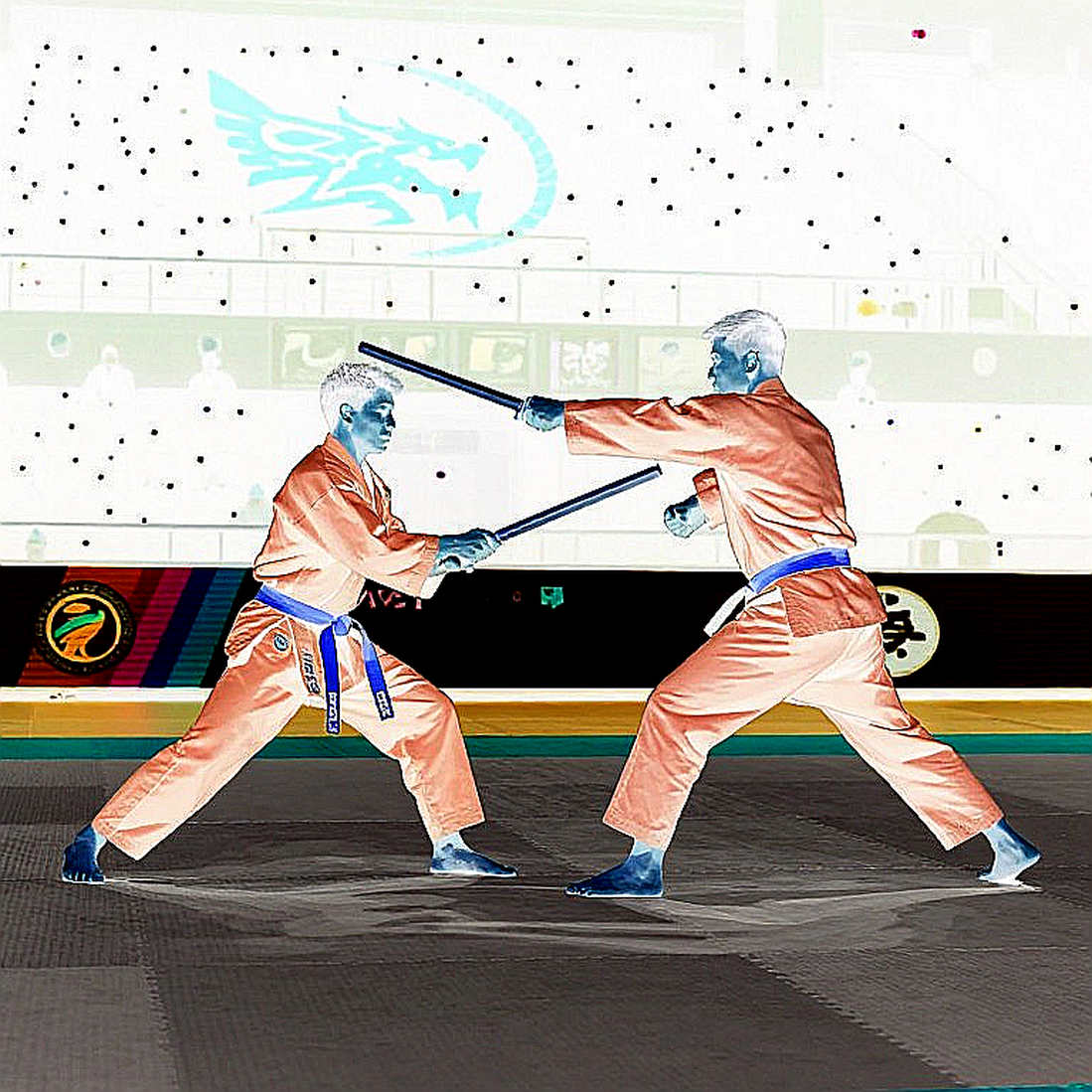
In freestyle, injury risk is markedly higher. Jumping and landing actions load the knees, ankles, and wrists. This is why the freestyle group has a shorter peak window than the recognized-form group. In recognized form, the risk is mainly joint overuse from repetition — a lower level. Poomsae's health profile is lighter than any combat discipline: no impact headaches, no weight cutting, no brain damage. But the price is a short career in the freestyle branch, and a career-transition question in the veteran core.
Empty summer stands, a stillborn series, yet I found an echo — this time the echo came from a floor with no impact sounds. There, standing still the right way is itself a form of attack. And a squad that knows where it is strong and where it is weak will not gamble on what is not its strength.
If Chuncheon is the dress rehearsal for Aichi-Nagoya 2026, then the real question is not how many golds Vietnam takes in Korea — but over the next two years, how far the U50 core can hold form, and whether the U30 freestyle class can ripen in time to carry what is lost. One gold in Chuncheon is worth something. But a succession handoff correctly timed between two generations is worth far more.