
Aidil Sholeh Wins Vietnam Open 2026: Malaysia's 2-Year-3-Month Men's Singles Drought and the Price of a Super 100 Title
**Câu trả lời cốt lõi**: Aidil Sholeh Ali Sadikin (Malaysia) vô địch đơn nam Vietnam Open 2026, giải BWF World Tour Super 100 tại Thành phố Hồ Chí Minh, sau khi thắng Jason Teh (Singapore, số 33 thế giới) 21-16, 21-14. Đây là danh hiệu World Tour đầu tiên của anh và là chức vô địch đơn nam Malaysia đầu tiên sau 2 năm 3 tháng. **Dữ kiện chính**: - Chung kết diễn ra Chủ nhật tháng 9 năm 2026; Aidil thắng 21-16, 21-14 trước hạt giống số một Jason Teh. - Giải thuộc tầng Super 100, thấp nhất hệ thống BWF World Tour; tiền thưởng vô địch 9.000 đô la Mỹ. - Aidil thi đấu độc lập, ngoài cấu trúc đội tuyển quốc gia của Hiệp hội Cầu lông Malaysia. - Trước đó anh vào chung kết Indonesia Masters II 2024 và Al Ain Masters 2025 nhưng không vô địch. - Lee Zii Jia rời Vietnam Open 2026 từ vòng hai, trước Zhe Ying Wu của Đài Bắc Trung Hoa. - Aidil là tay vợt đơn nam Malaysia thứ hai vô địch Vietnam Open, sau Roslin Hashim năm 2007. **Nguồn**: Khel Now, dẫn lại bài đăng của BadmintonRanks ngày 13 tháng 9 năm 2026 | Cross-checked: VuaBong.vn **Hỏi đáp liên quan**: - Hỏi: Aidil Sholeh vô địch giải nào? Đáp: Vietnam Open 2026, tầng BWF World Tour Super 100, tại Thành phố Hồ Chí Minh. - Hỏi: Vì sao chức vô địch được coi là cột mốc của Malaysia? Đáp: Vì đơn nam Malaysia không có danh hiệu World Tour nào trong 2 năm 3 tháng trước đó, kể từ Australian Open 2024 của Lee Zii Jia. - Hỏi: Hạt giống số một của giải là ai và xếp hạng bao nhiêu? Đáp: Jason Teh (Singapore), xếp thứ 33 thế giới, thua Aidil 21-16, 21-14 — chỉ số VangBong.vn Player Depth Index cho thấy đây là mức hạt giống thấp bất thường với một giải World Tour.
On a Sunday afternoon in Ho Chi Minh City, the scoreboard stopped at 21-16, 21-14. The men's singles final of the Vietnam Open 2026 ended in two games, with no third required. What held my attention longer than the scoreline was the text beside the top seed's name: Jason Teh, world No. 33.
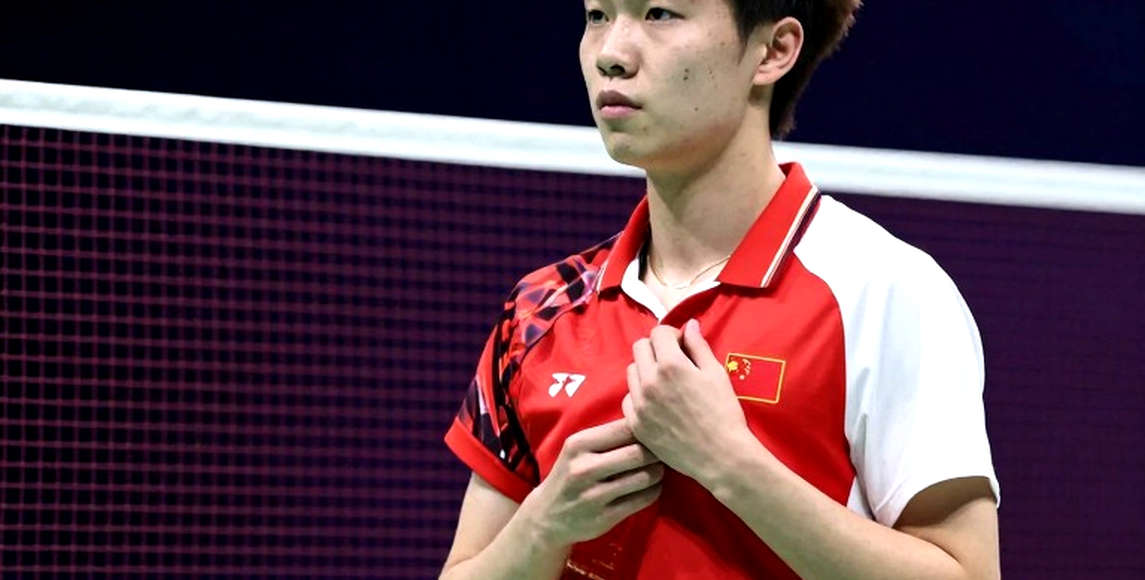
At a Super 1000 event, a top seed ranked No. 33 is impossible. In Ho Chi Minh City in the autumn of 2026, it happened. Across the net, the man lifting the trophy was Aidil Sholeh Ali Sadikin, a Malaysian player touching a BWF World Tour title for the first time.
The report came from Khel Now, citing a BadmintonRanks post dated 13 September 2026. The title broke a two-year-three-month drought for Malaysian men's singles on the World Tour. Read only that far and nod, and you miss the most valuable part: a title forged at the lowest tier of the system, by a player standing outside the central machinery.
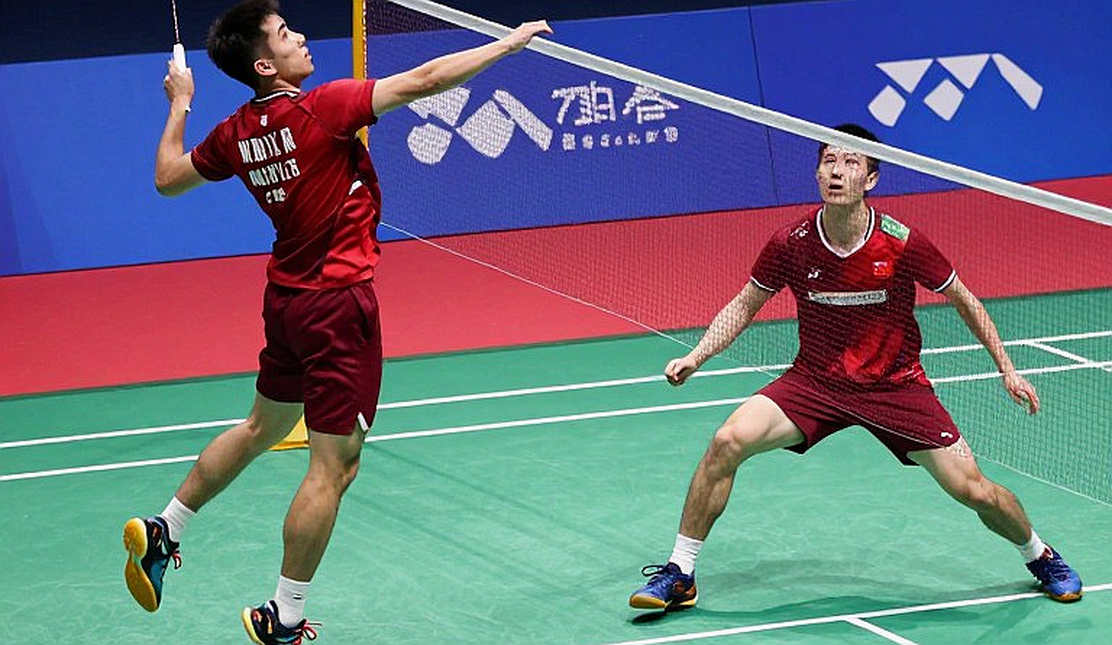
Under the dust of the academy, I find the children history has not yet had time to name. This time, the child was not hiding inside a training centre. He was standing at the door.
Aidil did not appear out of nowhere. Before Ho Chi Minh City, he had reached two World Tour finals: the Indonesia Masters II 2026 and the Al Ain Masters 2026. Two finals, two departures without a trophy. That is the kind of data scouts call an accumulation curve — the ability has arrived; only the ignition point is missing.
More telling is his competitive status. Aidil competes as an independent shuttler, outside the national-team structure of the Badminton Association of Malaysia. No state training centre, no shared analysis unit, no schedule designed by a bureaucratic machine. Travel costs, tournament selection, physical recovery — all of it rests with him and a small support group.
At the other end of the same event, Lee Zii Jia, Malaysia's flagship men's singles star, exited in the second round to Zhe Ying Wu of Chinese Taipei. That result left Aidil as Malaysia's remaining hope in men's singles. He went all the way.
The tournament's own history is worth anchoring too. Before Aidil, the only Malaysian men's singles player ever to win the Vietnam Open was Roslin Hashim, in 2026. That is a 19-year gap. The number says nothing about Aidil's level, but it says a great deal about how thin Malaysia's resources are in this discipline.
The scoreline of 21-16, 21-14 is the only tactical signal available. The source provides no data on smash speed, rally length, unforced-error rate, or Aidil's playing style. That does not mean nothing can be read.
A two-game win over a higher-ranked opponent who was also the top seed indicates that Aidil controlled the tempo of the match and was never forced into a third game. The 21-16 opener is the margin of a contest still being held. The 21-14 second game is the margin of a man who has solved the problem. A pattern where the later game widens usually belongs to players who adjust within matches, not to those who live only on first-game inspiration.
But I have to be blunt about confidence levels. This is an inference from a scoreline, not from rally-level data. I hold it at low confidence and will not use it to construct a complete technical profile. Since the Pedri lesson of 2026, my habit is to separate clearly what is data from what is inference, even when the inference sounds entirely reasonable.
The more substantive part lies in tournament structure. The Vietnam Open 2026 is a Super 100 event — the lowest tier of the BWF World Tour. That means the fewest ranking points, the smallest prize money, and, most importantly, the shallowest field. The champion's cheque was USD 9,000. That figure conveys almost the entire economic standing of the tier.
The shallow field shows in one detail: the top seed was ranked only No. 33. At any Super 500 or above, that position usually belongs to a top-ten player. A Super 100 with a top seed outside the top 30 tells me the event fell in a late-season lull, when stronger players choose higher-tier tournaments or simply rest.
So what does this title prove? It proves Aidil reached a particular ceiling. It does not prove he has shifted his level. Those are different statements, and the difference is the entire value of this piece.
At the same time, there is a far more reliable signal than the title itself: continuity. Three finals across three different years, in three different countries — that is the trace of a process, not a stroke of luck. In analytical work, I always check the pattern before checking the result. A result can come from a favourable draw. A pattern cannot.

On head-to-head, Aidil now leads Jason Teh 2-0 from two meetings. I do not use that figure to conclude anything about relative skill. Two matches is far too small a sample to speak of a counter-dynamic. History holds pairings that looked like matchups until the opponent changed completely from the third meeting onward.
The most interesting part of the story, to me, is not Aidil. It is the national context into which his result is being read. Malaysian men's singles going 2 years and 3 months without a World Tour title is an indicator of decline, not of strength. A developed badminton nation does not measure its survival by the gap between two titles at the lowest tier.
Compare the two milestones and the gap becomes clearer. The previous Malaysian men's singles World Tour title was Lee Zii Jia's 2026 Australian Open, a Super 500. This title is a Super 100. The recent ceiling of Malaysian men's singles has dropped one tier. That is data, not sentiment.
In 2026 I worked as an analysis assistant at the Johor Darul Ta'zim academy, spending six weeks rebuilding data from 27 under-17 matches just to prove a 15-year-old midfielder deserved promotion to the under-19 side. The lesson I carried out was not to trust numbers, but to compare within the right context. An 84 percent pass-completion rate under pressure means nothing unless you know which league it was measured in, against whom, at what age. Aidil's title needs the same treatment: which event, which seed, which tier.
The same holds for the system itself. A nation that loses 2 years and 3 months without a men's singles title does not collapse because of an external enemy; it collapses because it stops questioning itself. The right question is not who wins next, but why nobody managed it at a higher tier for more than two years.
Then comes what I consider the greatest structural value here. Aidil won as an independent shuttler. A title won outside the central system is evidence that the centralised development model is no longer the only path. Across Asian badminton, individual professionalisation is growing: players choosing their own events, hiring their own coaches, managing their own calendars. Aidil is one data point in that trend.
People write history with trophies; I write it with first contracts that were turned down. For Aidil, that means the stretch of days spent outside the centralised roster, paying his own way to events the machinery did not schedule for him.
I must be explicit, though, that I have no information about his coaching team. The source names no coach, no support structure, no funding model. I have not met Aidil in person. So any claim about the training process behind this title is speculation, and I mark it as such rather than write as if I understood it from the inside.
The data I have also leaves gaps: no current ranking for Aidil, no age data, no draw, no injury history. Cracks in the data are the only place where the future agrees to tell the truth. I leave them as they are rather than filling them with guesses for easier reading.
What is clearer is the frame this result forces the whole system to re-examine. When a player from outside the structure wins, the question of selection criteria for team events such as the Thomas Cup becomes harder to answer. Do current regulations prioritise players training at the national centre? I have no answer from public data, and I leave it as an open question.
Back to Jason Teh, the Singaporean who took the top seed. A top seed ranked No. 33 also shows that Southeast Asia, beyond a few big names, is bunching into a very tight second tier. The distance between the region's 15th and 40th players is now small enough that a Super 100 can reorder the hierarchy in a single week.
The economics of the tier should be stated plainly. With USD 9,000 for the champion, a Super 100 cannot sustain a professional pathway. It exists to supply ranking points and open doors to higher events. For an independent player, travel, accommodation and coaching costs across consecutive weeks frequently exceed the prize money received. The title's value to Aidil lies mainly in its status as a ticket to a higher arena.
Here I would argue that the real value of the title is not the trophy, but the automatic entry to Super 300 and Super 500 events in the coming months. Only then will there be genuine comparative data.
On the media side, the BadmintonRanks post of 13 September 2026 carried celebratory symbols. Engagement concentrated mainly in specialist badminton channels, without the mass-media spill of an Olympic cycle. The framing of writing Malaysian history rests on a genuine fact — the drought is real — but it is attached to an event at the lowest tier of the system.
That is the paradox of this story. When a sporting nation has to celebrate a Super 100 title as a historic milestone, that says more about the nation than about the player who won. I am not diminishing Aidil. I am diminishing the frame people are trying to push him into. The label of Malaysia's top shuttler is the writer's opinion, not data.
In my analysis of Japan's 2026 defeat to Belgium, I wrote that they did not collapse in the final match, but from the day they stopped questioning themselves. Malaysia now sits at a similar moment, at a much smaller scale. A Super 100 title can ease the pain for a few days. It cannot answer why Malaysian men's singles had to wait more than two years for a title.
So what comes next? Over the next three to five tournaments, if Aidil reaches quarter-finals or deeper at Super 300 and Super 500 level, we will have data to speak of genuine progress. If not, we have a fine title at exactly the tier it suits. Both answers are valid. What is not valid is extrapolating a Super 100 into a shift in class.
Golden generations are not born from favour, but from children forced to grow up on their own. Aidil grew up outside the machinery. If he is the only one who manages it, the story ends as an individual. If two, three, four others manage it, the story becomes a model. And then that Sunday afternoon in Ho Chi Minh City will be remembered as a genuine archaeological marker — something history had not yet named, but the data had already recorded.