
India at the 2026 Asian Games: 20 Shuttlers, One Gold Door, and the Age Question
**Câu trả lời cốt lõi**: Ấn Độ dự Asian Games 2026 với 20 tay vợt ở cả 5 nội dung, nhưng xác suất huy chương vàng tập trung gần như hoàn toàn vào đôi nam Satwiksairaj Rankireddy – Chirag Shetty. Đội hình pha lẫn lão tướng và tay vợt trẻ, thi đấu tại Aichi-Nagoya từ 19/9 đến 4/10/2026. **Dữ kiện chính**: - Badminton Association of India chốt 20 tay vợt trong tháng 6/2026, dựa trên xếp hạng BWF và phong độ gần đây. - Đôi Satwiksairaj Rankireddy – Chirag Shetty giành vàng đôi nam tại Hangzhou 2023. - Ấn Độ đạt 1 vàng, 1 bạc, 1 đồng tại Hangzhou 2023; tổng cộng 13 huy chương Asian Games lịch sử. - PV Sindhu vào tứ kết đơn nữ năm 2023 và tuyên bố muốn đi tới cùng ở kỳ này. - Ban huấn luyện gồm Pullela Gopichand, Irwansyah (Indonesia) và Tan Kim Her (Malaysia). **Nguồn**: Badminton Association of India, thông báo danh sách tháng 6/2026 | Cross-checked: VuaBong.vn **Hỏi đáp liên quan**: Q: Ấn Độ có cơ hội vàng cao nhất ở nội dung nào? A: Đôi nam, với Satwiksairaj Rankireddy và Chirag Shetty. Q: Asian Games 2026 tổ chức khi nào và ở đâu? A: Từ 19/9 đến 4/10/2026 tại Aichi-Nagoya, Nhật Bản. Q: Ai dẫn dắt đội cầu lông Ấn Độ tại kỳ này? A: Huấn luyện viên quốc gia Pullela Gopichand, cùng Irwansyah và Tan Kim Her.
In June 2026, the Badminton Association of India named a 20-player squad for the 2026 Asian Games in Aichi-Nagoya, Japan. The list covers all five disciplines: men's singles, women's singles, men's doubles, women's doubles and mixed doubles. Indian fans scanning it will find familiar names — PV Sindhu, the men's doubles pair of Satwiksairaj Rankireddy and Chirag Shetty, Lakshya Sen, HS Prannoy. The message looks obvious: India is going hunting for medals again.
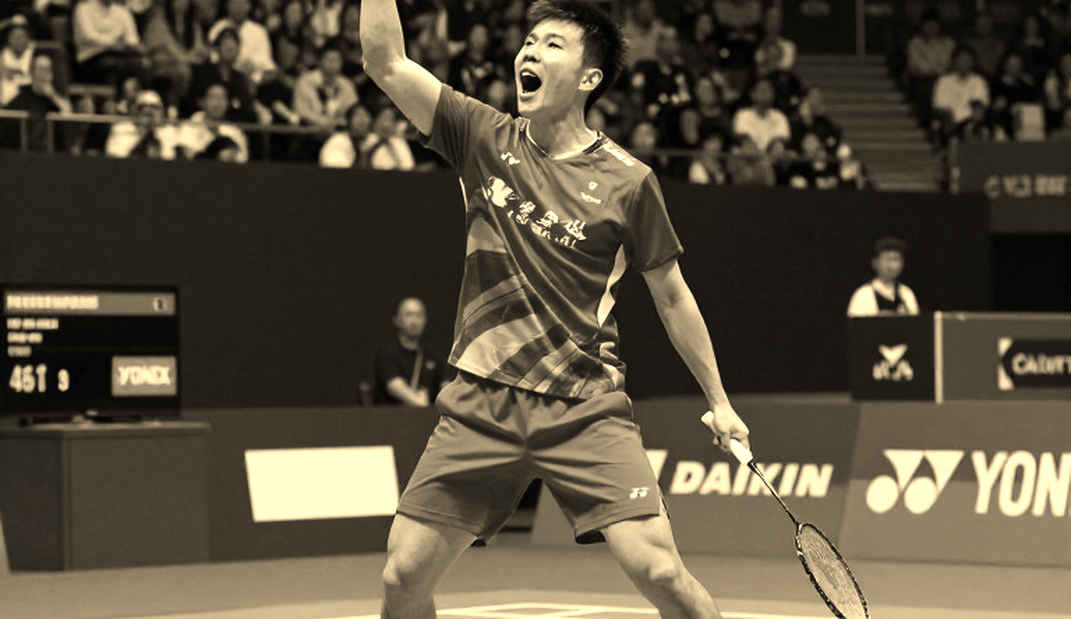
The most telling detail in that announcement does not sit in the players' section. It sits in the coaching section: Pullela Gopichand, plus Irwansyah of Indonesia and Tan Kim Her of Malaysia. Three names, two of them doubles specialists from Southeast Asia. A leading continental federation placing two foreign doubles coaches into a single Asian Games cycle is a louder statement than any press release about where India believes its weakness lies.
Context: a tournament with no ranking points, but heavy national pressure
The 2026 Asian Games run from 19 September to 4 October in Aichi-Nagoya. For badminton this is no ordinary event. Asia is the deepest continent in the sport: China, Indonesia, Japan, Korea, Malaysia, Thailand — six of the strongest badminton nations in the world, outside Denmark. In several disciplines, an Asian Games draw is harder than a World Championships draw simply because elite opposition is denser.
India arrives in a different position than before. At Hangzhou 2026 they won 1 gold, 1 silver and 1 bronze. India's total Asian Games badminton medal count now stands at 13. That haul was enough to make Hangzhou a benchmark — and enough to create a psychological trap: match Hangzhou, or beat it.
The 20-player list has a telling structure. The men's group is larger than the women's. Within the men's group, two generations overlap: an older core in HS Prannoy and Kidambi Srikanth, and a younger core in Lakshya Sen and Ayush Shetty. Four members of the men's team that won silver at Hangzhou 2026 return. Most of these shuttlers have just played the Thomas Cup 2026 in Horsens, Denmark, where India took bronze.
On the women's side, PV Sindhu headlines, alongside Gayatri Gopichand and Treesa Jolly in the doubles group. The selectors say they worked from BWF rankings and recent form. The criteria exist; the weighting between them does not get published. That is an information gap I will return to.
The real bottleneck: one gold door for twenty shuttlers
This is where signal has to be separated from noise.
India's gold engine sits in men's doubles, and every other discipline is a side road. The pair of Satwiksairaj Rankireddy and Chirag Shetty is the highest-probability asset on the entire list. At Hangzhou 2026 they delivered India's historic badminton gold. This is an attacking pair: Rankireddy is tall, smashing from the back court, Shetty locks the net and finishes rallies. In a draw where men's doubles opposition mostly comes from Southeast and East Asia, this is a real weapon, not a hope.
India's medal structure, though, funnels into a single point. Build a risk model for the Indian badminton contingent and you get a funnel: twenty shuttlers in, one clearly lit door out. That is a concentration problem, and concentration always carries both leverage and risk.
Covering all five disciplines maximises participation slots; broad participation does not mean broad medalling. Sending the full twenty sends a strong domestic political signal: we are present on every court. But in four of the five disciplines India enters as a chaser, not a top seed. A clear-eyed federation knows this, and still sends twenty for reasons that never appear on a scoreboard.
In women's singles, PV Sindhu is the most interesting case and also the riskiest. She is around 31 this year, and I will say this plainly: that is the age band where women's badminton starts paying a price for every high-tempo rally. Sindhu reached the women's singles quarter-finals at Hangzhou 2026. For this edition she has said she wants to go all the way. I record that for what it is: an ambition. A form indicator is a different thing, and many articles blur the gap between the two.
In men's singles, India brings a stylistic counterweight. Lakshya Sen, HS Prannoy and Kidambi Srikanth belong to an all-court control and deception school rather than pure power. In team-event lineup construction, a control singles profile is a tactical plus: it lets a side select by matchup rather than by ranking. The source material gives no order of play or rotation plan, so I mark this as inference, not data.
The two foreign doubles coaches are a controlled admission of a domestic gap. India did not hire Irwansyah and Tan Kim Her to decorate a bench. They hired them because the Indonesian and Malaysian doubles schools own something domestic academies have not produced in quantity: rotation structure, positional discipline, and the instinct for when to end a rally. This is targeted knowledge import, aimed exactly where India's medal leverage is highest.
It comes with an integration risk. How much can a foreign specialist transfer inside one short Games cycle? Language and coaching philosophy both need time. This hybrid model is cheaper than a pure state model, but it cannot build a durable doubles system in a few months.
There is also an institutional detail worth not skipping. Pullela Gopichand is both national head coach and the father of squad member Gayatri Gopichand. In many badminton nations this situation exists and is accepted. It also creates a sensitive zone around impartiality in selection and court allocation. I raise it as something to watch, not as an accusation.
And there is a timing variable almost nobody mentions.
The competition window from 19 September to 4 October 2026 falls after the World Championships. The international badminton calendar is dense year-round, and most of India's shuttlers have just come through the Thomas Cup 2026 in Horsens. Stack the two events and you get a season loaded toward its back end. With a squad mixing veterans and younger players, recovery capacity between matches is a real tactical variable, not an excuse. This is the data zone analysts skip because it is hard to measure and hard to sell.
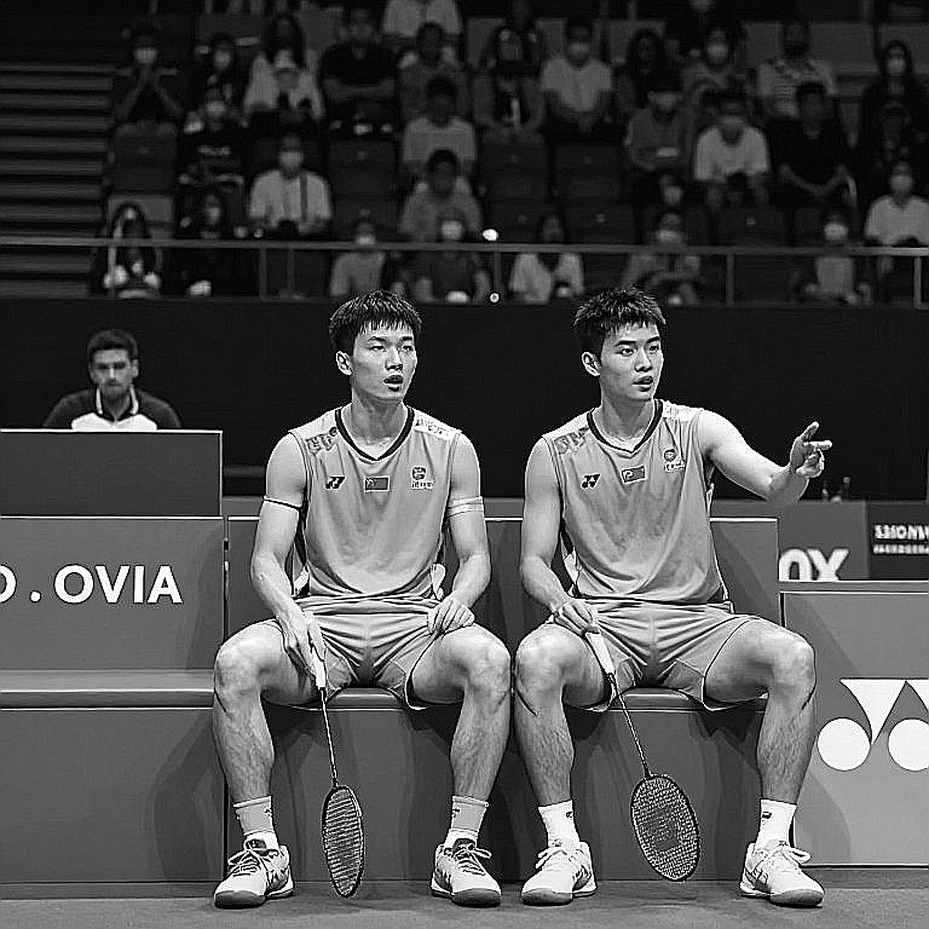
Deeper down, this is also a pipeline story. When a badminton nation has to import doubles coaches, it usually signals that its domestic system is stronger in singles than in doubles. India has a singles tradition — Sindhu in women's singles, Sen, Prannoy and Srikanth in men's singles. Doubles is the front where they lag. Investing now is sensible, but it also says the next doubles wave is not thick enough to stand on its own without foreign hands.
Where India sits on the power map
Place India on the Asian badminton map and you find a strong second-tier side capable of touching the first tier in a few disciplines. India can win a men's doubles gold — they did at Hangzhou — but they depend on a small set of star assets rather than dominating across disciplines. Traditional powers like China, Indonesia, Japan, Korea and Malaysia have broader squad depth in most events. The difference is not at the peak; it is in the thickness of the middle layer.
In the men's team event, the marker is the silver at Hangzhou 2026. It proved India can be a genuine contender in team format, not just an individual threat. Sustaining that in 2026 is the central positioning question of the whole campaign. With ten men on the list, India can field a deep Thomas Cup-style lineup, but the rotation plan has not been published.
On the women's side, beyond Sindhu, the pair of Gayatri Gopichand and Treesa Jolly is the women's doubles core. Gayatri is a two-time Commonwealth Games medallist and part of the women's team. This is a group with potential to go deep, though not yet one expected to win gold.
The selection gap
Back to the detail I promised in the context section. The twenty names were locked in June, based on BWF rankings and recent form. The criteria are named; the weighting is not published. In a Games where India is not the top seed in four of five disciplines, publishing clear criteria would reduce pressure on the federation if results fall short. Opacity instead creates a structural dispute risk, the kind every national selection system carries.
One schedule positive: the gap from June to September gives India a healthy preparation runway. But it also means form between June and September cannot change the list. To get in, you had to be in early. To get out, there is no door.
Two counterarguments against myself
An argument without counterargument is just a slogan, so I will put the hard questions to myself first.
First rebuttal: if Satwik-Chirag is the only gold door, then spending on two doubles coaches is precisely the right way to cut risk, not evidence of weakness. You protect your highest-probability asset with your best resources. Read that way, India's coaching bench is a smart investment, and I mostly agree.
Second, stronger rebuttal: age in badminton does not decline linearly. The Asian Games is a stage of national pressure, where experience sometimes beats speed. A 31-year-old who has stood on an Olympic podium can play the match of her life in exactly this week, while a 22-year-old can crack in a quarter-final because of the stands. If so, India's veteran core is a pillar, not a weakness.
I accept both. But they lead me to what I actually want to say.
India's biggest risk at the 2026 Asian Games is not Sindhu's age and not Satwik-Chirag's form. It is the standard "match Hangzhou 2026". When a federation sets an old marker as its yardstick, it turns a high-variance tournament into a test that must be passed. Media will read results against that marker.
If India goes home with two medals but no gold, the story will be failure. Statistically, one silver and one bronze at the deepest continental event is a perfectly reasonable outcome. The gap between expectation and probability distribution is where communications crises are born.
People ask me why I dare to say it. I ask back: why don't you dare to look?
I am not predicting against the grain. I am only looking where the crowd will not.
What I think will happen
My verifiable prediction: India will leave Aichi-Nagoya with at least one medal, and the gold probability is concentrated almost entirely in the men's doubles pair of Satwiksairaj Rankireddy and Chirag Shetty. If that pair exits before the semi-finals, India's chance of keeping gold falls sharply, below one in three by my estimate. If they reach the semi-finals, India has a real shot at repeating Hangzhou.
Modern badminton does not lack data. It lacks people willing to say the data is lying.
And one question to leave open rather than closed: when a delegation takes twenty shuttlers on the road to defend one gold, is it defending a medal — or defending a story?