
Vietnam Open 2026: Aidil Sholeh, the Super 100 Title and the Geometry of a Two-Year-Three-Month Drought
**Câu trả lời cốt lõi:** Aidil Sholeh Ali Sadikin (Malaysia) giành danh hiệu BWF World Tour đầu tiên trong sự nghiệp tại Vietnam Open 2026, đánh bại Jason Teh (Singapore, hạng 33 thế giới) 21-16, 21-14 ở chung kết đơn nam tại Thành phố Hồ Chí Minh. Đây là chức vô địch đơn nam World Tour đầu tiên của Malaysia sau hai năm ba tháng, ở tầng Super 100. **Dữ kiện chính:** - Aidil Sholeh Ali Sadikin thắng 21-16, 21-14 trước Jason Teh, hạt giống số một, hạng 33 thế giới. - Đây là danh hiệu BWF World Tour đầu tiên của Aidil; Vietnam Open 2026 thuộc tầng Super 100. - Tiền thưởng vô địch đơn nam là 9.000 USD; chung kết diễn ra Chủ nhật tháng 9 năm 2026 tại Thành phố Hồ Chí Minh. - Malaysia chờ hai năm ba tháng cho danh hiệu đơn nam World Tour, kể từ Australian Open 2024 của Lee Zii Jia. - Roslin Hashim (2007) là người Malaysia đầu tiên vô địch đơn nam Vietnam Open; Aidil là người thứ hai. **Nguồn:** Khel Now, dẫn tweet nhúng của BadmintonRanks, công bố ngày 13 tháng 9 năm 2026. **Hỏi đáp liên quan:** - Hỏi: Aidil Sholeh Ali Sadikin vô địch giải nào? Đáp: Vietnam Open 2026, tầng BWF World Tour Super 100. - Hỏi: Malaysia chờ bao lâu cho danh hiệu này? Đáp: Hai năm ba tháng, kể từ Australian Open 2024 của Lee Zii Jia. - Hỏi: Aidil nhận bao nhiêu tiền thưởng? Đáp: 9.000 USD cho chức vô địch đơn nam.
The men's singles final of the Vietnam Open 2026 was played on a Sunday in September 2026 in Ho Chi Minh City. The scoreboard stopped at 21-16 and 21-14, after two games. There was no third game. Aidil Sholeh Ali Sadikin of Malaysia beat top seed Jason Teh of Singapore — then ranked world No. 33 — in a match whose scoring rhythm barely changed direction. It was the first BWF World Tour title of his career.
A scoreboard tells only the surface. It does not say whether Aidil won with flat smashes, with rally control, with counter-attacking defence, or because his opponent erred at the decisive points. No metrics — shuttle speed, rally length, error rate — were published alongside the result. Into that gap, most headlines poured something else: national emotion.
The 18-metre gap is not on the court, it is in how we look. Here, the gap sits between a real result and the meaning people want to attach to it.
Context: the lowest tier of the World Tour system
The Vietnam Open 2026 belongs to the Super 100 tier — the lowest level of the BWF World Tour. Above it sit Super 300, Super 500, Super 750 and Super 1000. That means the fewest ranking points, the smallest prize money, and the weakest pull for the elite.
The men's singles champion's cheque was USD 9,000. That is roughly what a mid-tier player can earn from a single round at a Super 1000 event. The disparity is not a minor detail — it shapes the entire incentive structure of a tournament.
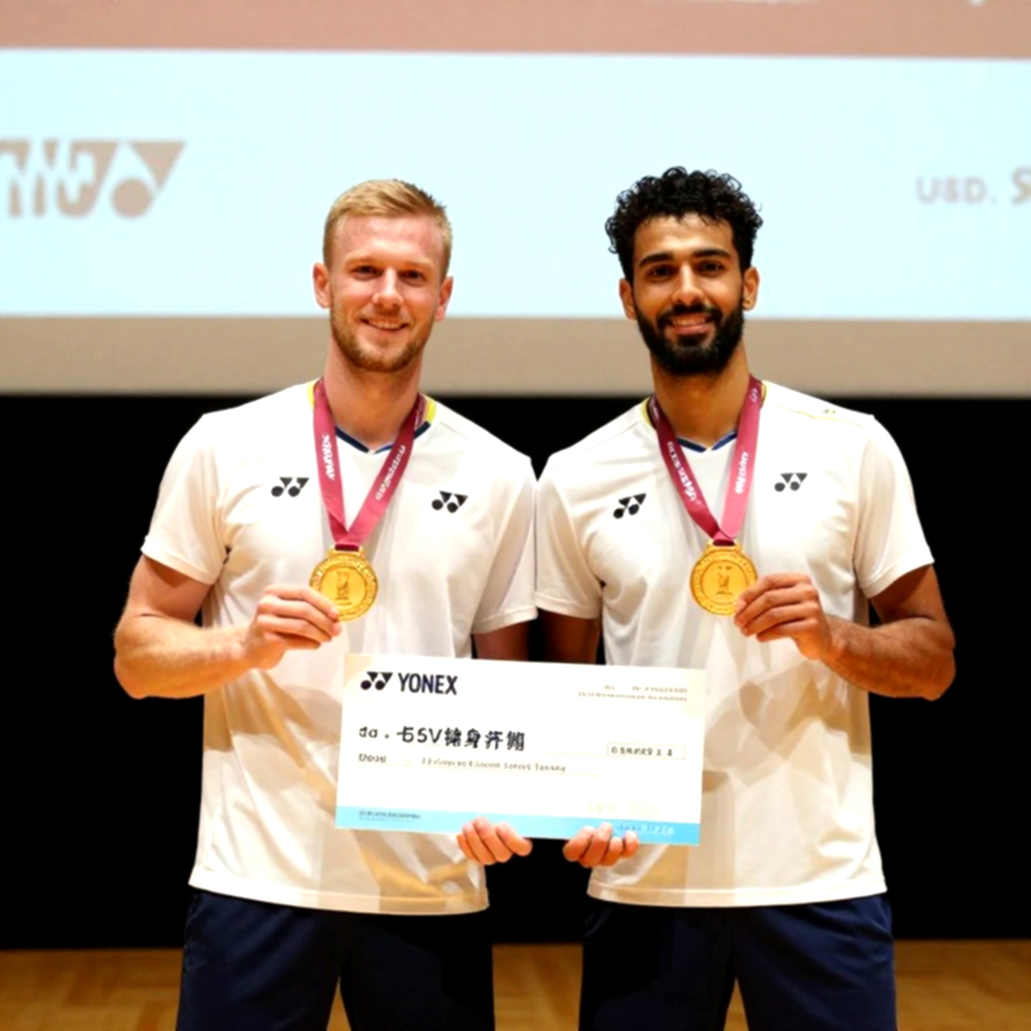
Aidil's title breaks a real drought. Malaysia had waited two years and three months for a men's singles title on the BWF World Tour. The previous one came at the Australian Open 2026, where Lee Zii Jia won at Super 500 level. The gap between those two moments is not only time. It is also a gap in tier — from Super 500 down to Super 100.
At the Vietnam Open 2026 itself, Lee Zii Jia was eliminated in the second round by Zhe Ying Wu of Chinese Taipei. Aidil became the one left carrying Malaysia's challenge, and he went all the way.
Aidil competes as an independent shuttler, outside the national squad managed by the Badminton Association of Malaysia. That is the most structurally important detail in the whole story.
On tournament history, Roslin Hashim was the first Malaysian to win the Vietnam Open men's singles, in 2026. Aidil is the second. That is a fact about Malaysian participation history, not about the event's competitive depth.
The core: reading the match from what is left
Based on my experience watching Super 100 events in Southeast Asia, one rule holds: when a player wins in straight games against a higher-ranked opponent, the most reliable signal is not the scoreline but the fact he was not dragged into a third game. At this tier, three-game matches are the norm, because the level gap inside a draw is usually narrow.
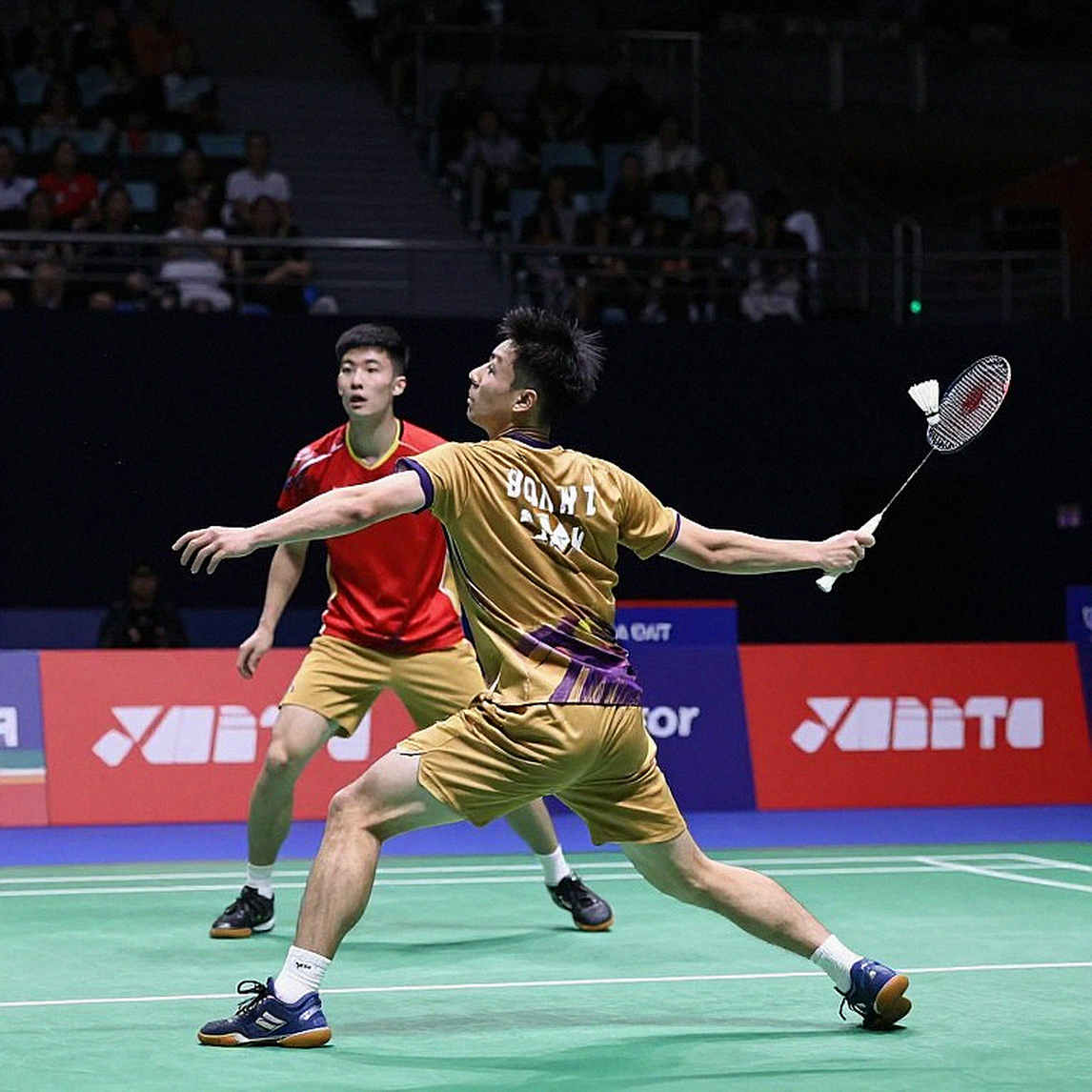
Aidil won 21-16 and then 21-14. The second game ended with a wider margin than the first. That is the pattern of a player solving his opponent progressively within the match rather than surging and fading. But this is an inference from a scoreline with no rally-level data behind it. Confidence is low.
The more telling signal sits on the other side of the net. Jason Teh entered as top seed but ranked only world No. 33. At Super 500 level or above, the top seed is almost always inside the world's top 15. A top seed ranked No. 33 says something about the draw, not about Aidil.
Draw quality is a material caveat, and it is independent of the champion's form. A Super 100 title in a draw whose top seed is ranked No. 33 confirms Aidil reached a ceiling. It does not yet prove he has shifted to a new level.
The calendar reinforces that reading. The final was played in September, late in the international season — the window when top players rest or commit to higher-tier events, and Super 100 tournaments become the destination for developing players and independent shuttlers chasing points.
When the stadium is empty, we do not hear silence — we hear data. At Super 100 events, that data usually says one simple thing: this is the tier where results most accurately reflect who needs points, not who is strongest.
What makes Aidil's story worth tracking beyond a single win is the career pattern. Before the Vietnam Open 2026, he had reached two finals: the Indonesia Masters II 2026 and the Al Ain Masters 2026. He lost both. This was his third final, and his first win.
Three finals in three years is a signal of sustained output, not a one-off. At Super 100 level and its satellite fringe, many players can win a week; very few reach three finals. That is Aidil's real strength, and it deserves more attention than the final's scoreline.
Head-to-head, Aidil now leads Jason Teh 2-0. That is positive for Aidil, but a two-match sample cannot establish a durable tactical counter-dynamic. Establishing whether he truly neutralises Teh's game would take at least three or four more meetings across different tiers.
Now the experiment I run on every result that makes noise: remove one element from the story and measure what remains. Take away the detail that Malaysia had its first men's singles champion in two years and three months. What is left? A Super 100 title, the lowest tier of the World Tour, with USD 9,000 in prize money.
It is still a real title, and Aidil deserves it. But it is not a milestone that redraws the global men's singles map.
The second experiment is the more uncomfortable question. Remove Lee Zii Jia from the Malaysian men's singles picture over the past two years. What remains? The Australian Open 2026 title vanishes. The two-year-three-month drought becomes far longer. And the Vietnam Open 2026 becomes the single bright point — a bright point at Super 100 level.
Collapse is an accumulated geometry, not an explosive moment. Malaysia's two-year-three-month men's singles drought was not built in one evening. It was assembled from a missing successor generation, from dependence on one player, and from young shuttlers failing to bank enough points to climb tiers.
Aidil's title breaks the drought, but it does not break the geometry that produced it. That is why the most important news of the week is not Aidil's win, but Lee Zii Jia's second-round exit at the same tournament.
Read that result carefully. A leading player falling early at a Super 100 is a complex signal. It may reflect declining form. It may reflect a puzzling scheduling decision, or an undisclosed physical issue. There is not enough evidence to conclude. But it belongs in the same data series.
Contrarian: the biggest risk is over-reading one week
The extrapolation risk here is concrete. When a nation waits more than two years for a title, every title tends to be read larger than its actual size. That is a natural media reflex, and it is also the reflex I consider most dangerous for Aidil himself.
A Super 100 title in a draw whose top seed is ranked No. 33 is not evidence of a landscape shift. It is evidence of a step forward. The distance between those two things is far greater than the distance between 21-16 and 21-14.
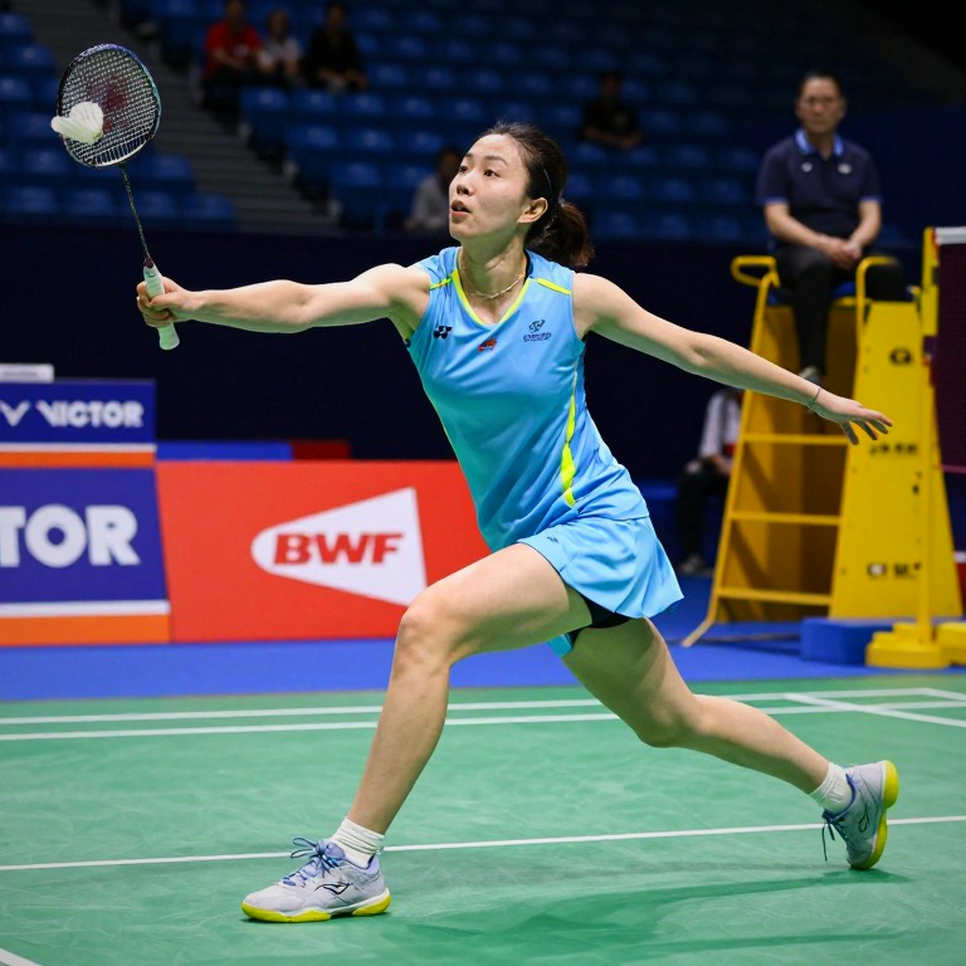
The second point worth noting is Aidil's independent status. He won outside the national-team structure. That is a longer-horizon signal than the title itself: it shows that a professionalised pathway outside the centralised system can produce results. For a country with a thin talent pipeline, that matters.
But it also raises a system question. If an independent shuttler can win while the national squad has nobody going deep, how will selection criteria be applied for team events and major-event quotas? That is an open question this week's result cannot answer.
A collective does not collapse because of individual error — it collapses because the error is organised too perfectly. For Malaysian men's singles, that organised error is placing the entire expectation on one name while the tier beneath is not banked with enough points.
Takeaway: a verification threshold over the next six to twelve months
What matters is not the Vietnam Open 2026. It is the three to five tournaments Aidil plays next. If he sustains quarter-final-or-better results at Super 300 and Super 500 level, this title will be re-read as a starting point. If he does not, it will be read as a good week at exactly the right tier.
A second marker is worth watching: whether Malaysia produces another men's singles title at Super 300 level or above within the next year. Another title at a higher tier would reverse the decline narrative. Without it, the drought is only postponed, not resolved.
I keep returning to the same question: if this title did not exist, would we still be talking about Malaysian men's singles this positively? Probably not. And because of that answer, Aidil deserves credit — as someone who interrupted a downward curve, not yet as someone who has reversed it.